
About Lim Tze Peng
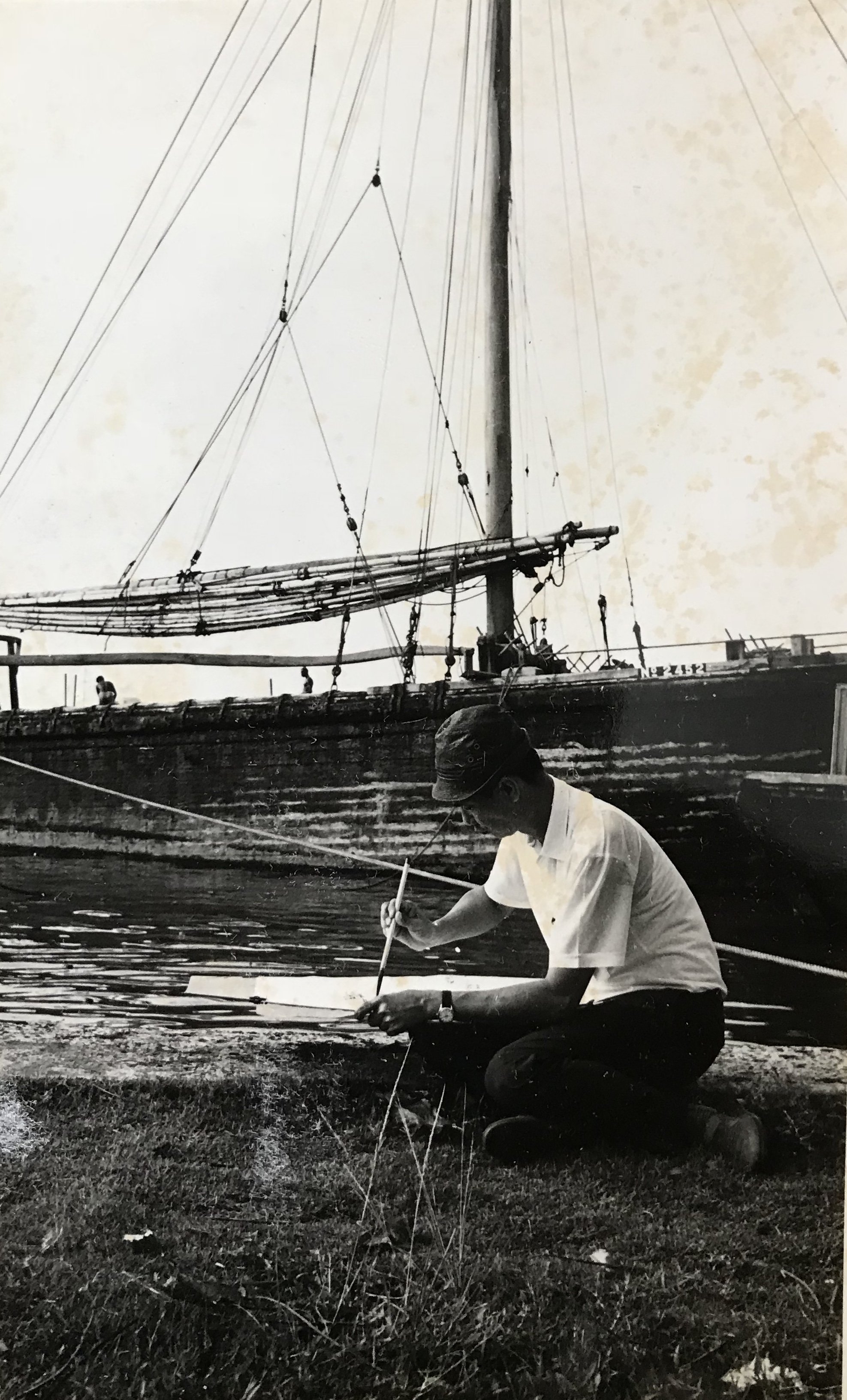
Born in 1921 in a kampong in Pasir Ris, Singapore, Lim Tze Peng grew up in humble surroundings and developed an early interest in Chinese painting and calligraphy.
After completing his education at Chung Cheng High School, he entered the education service and began teaching at Xinmin School, eventually serving as its principal for many years.
Throughout his teaching career, he continued to paint and practise calligraphy in his spare time.
His artistic journey can be traced back to the 1940s, with his earliest known ink work dating to 1946.
Upon retiring from education in 1981, Lim devoted himself fully to art, beginning a remarkable second chapter in a life that would span more than seven decades of artistic practice.
In black and white 笔墨
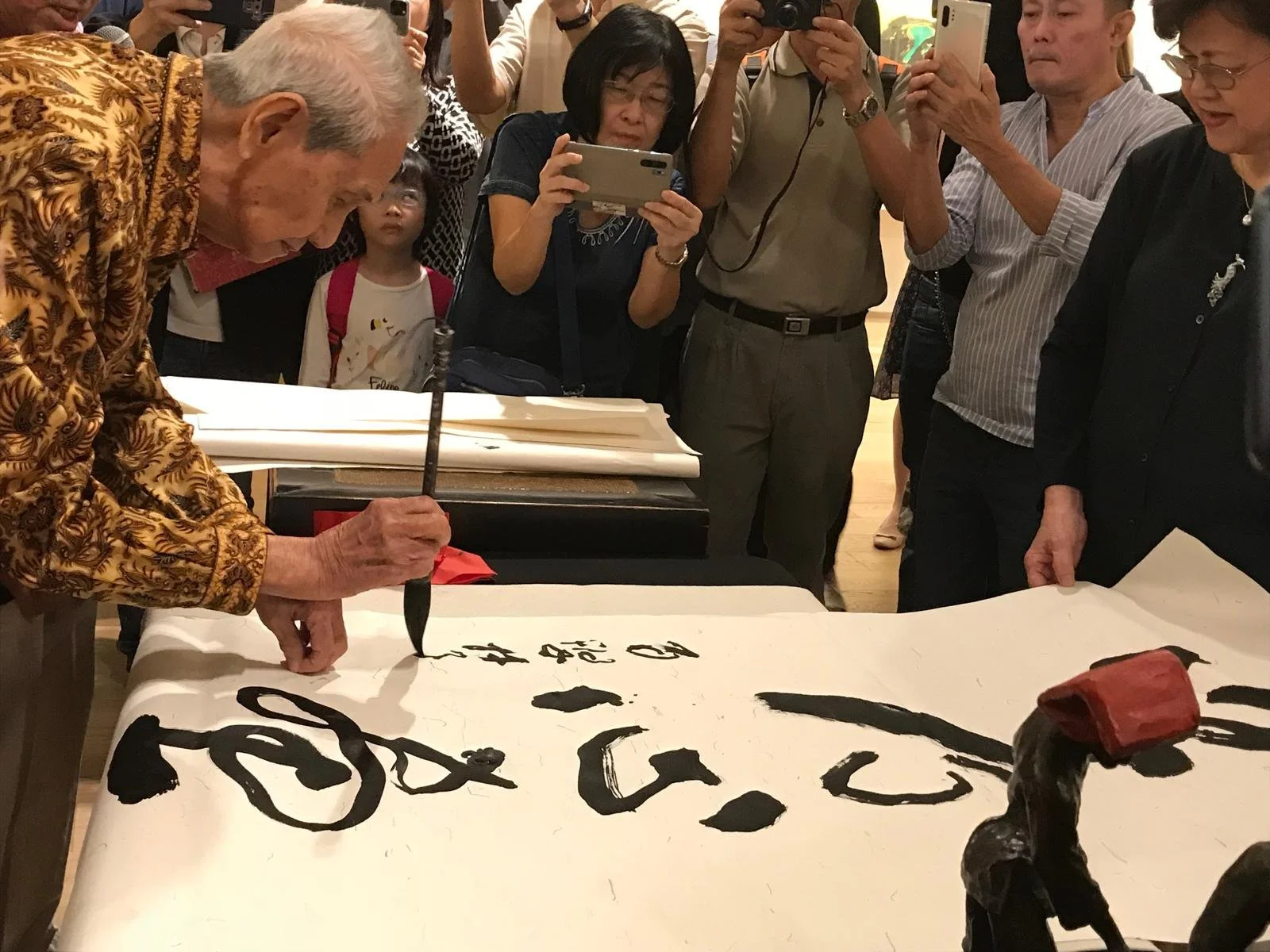
At the heart of Lim Tze Peng’s calligraphic practice lies a deep respect for the traditions of Chinese writing.
His black-and-white calligraphy demonstrates his sensitivity to the rhythm, weight and movement of the brush, often transforming classical poetry into powerful visual compositions.
He was particularly drawn to poetry from the Tang and Song dynasties, whose themes of friendship, nature, longing, patriotism and the human condition offered rich material for his brush.
Rather than treating the poem simply as text, Lim explored its emotional character through the pace and energy of his strokes.
His calligraphy therefore exists simultaneously as literature and visual art.
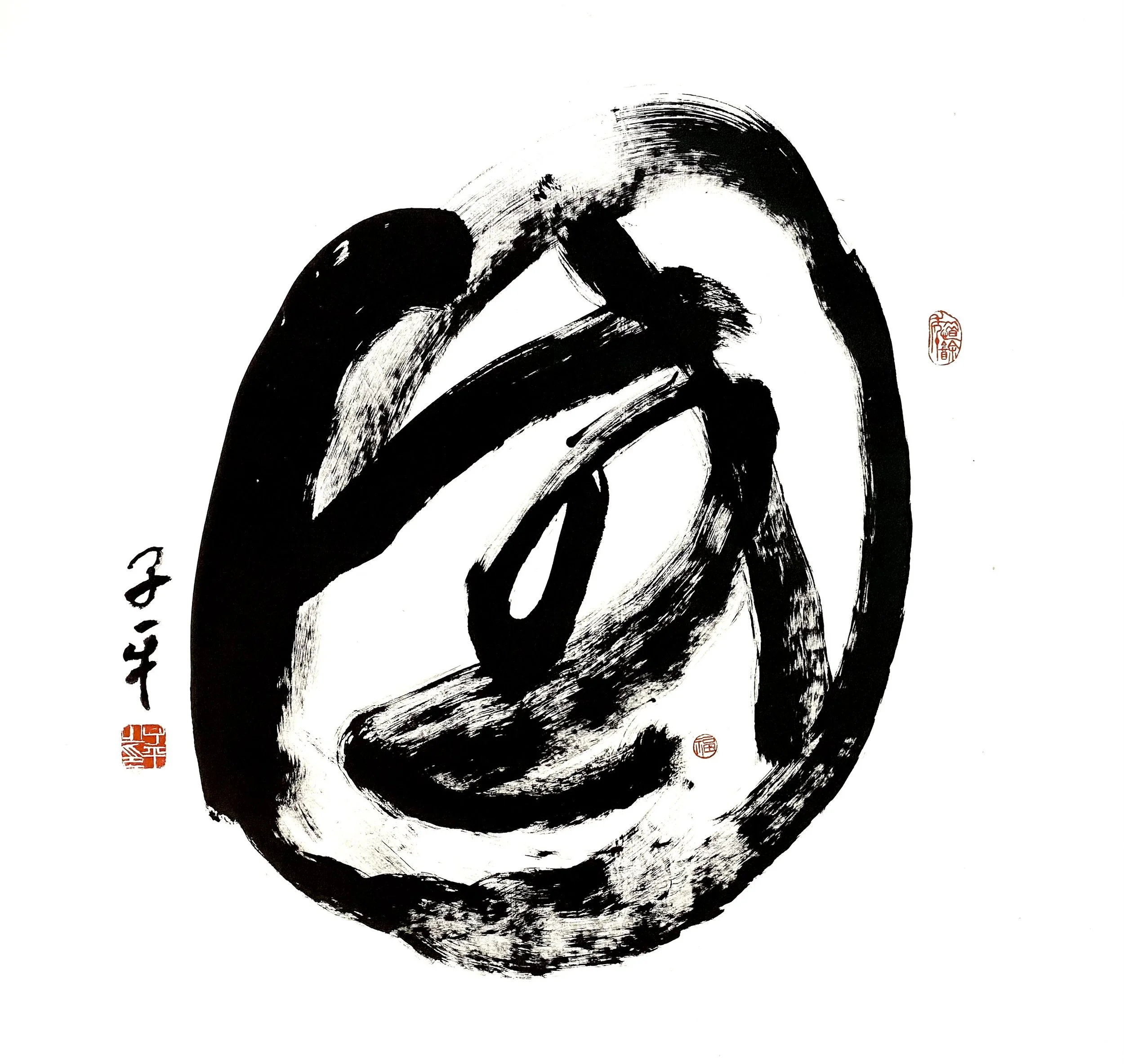
国
Nation
97x100cm
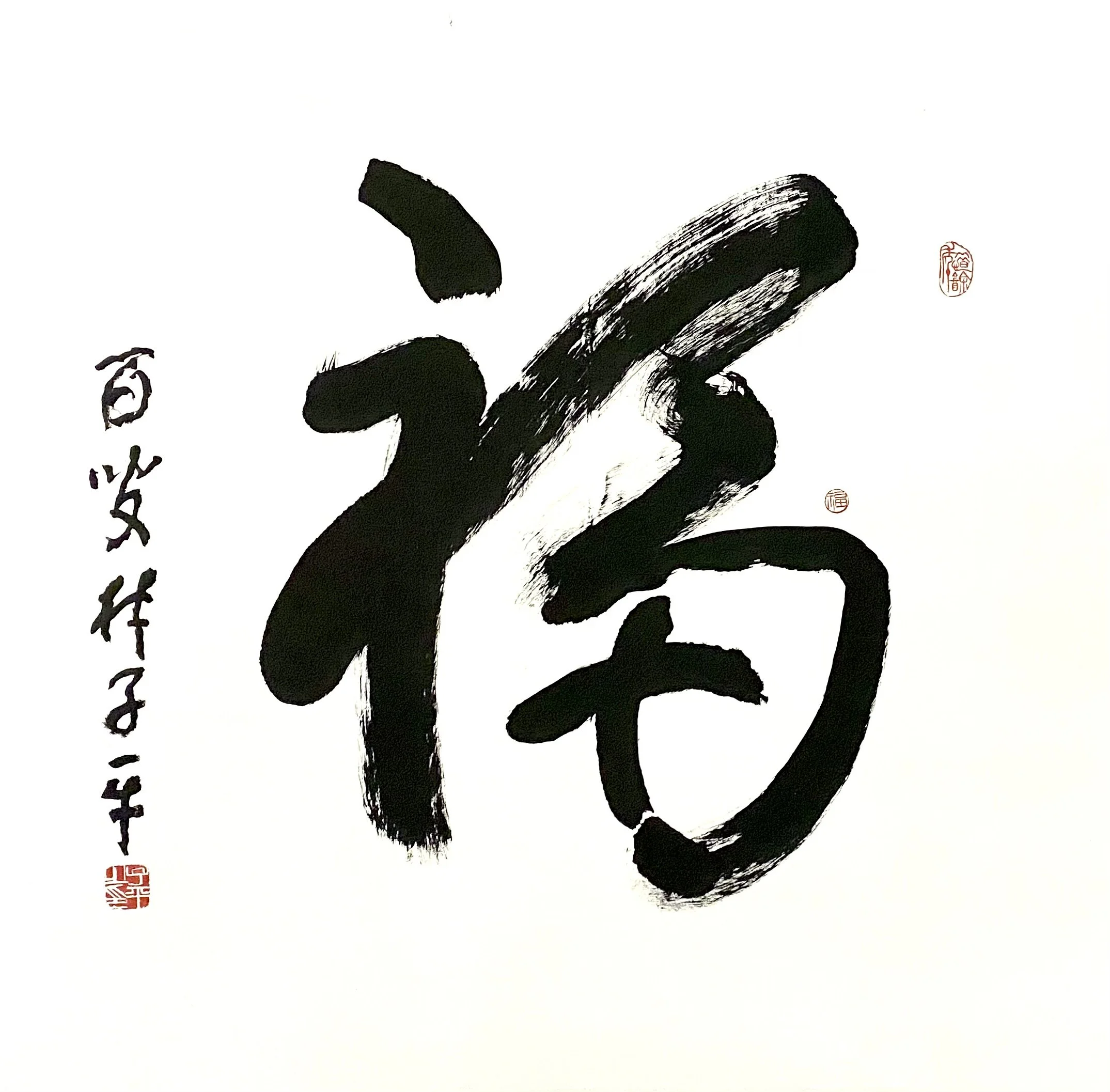
福
Good Fortune
97x100cm
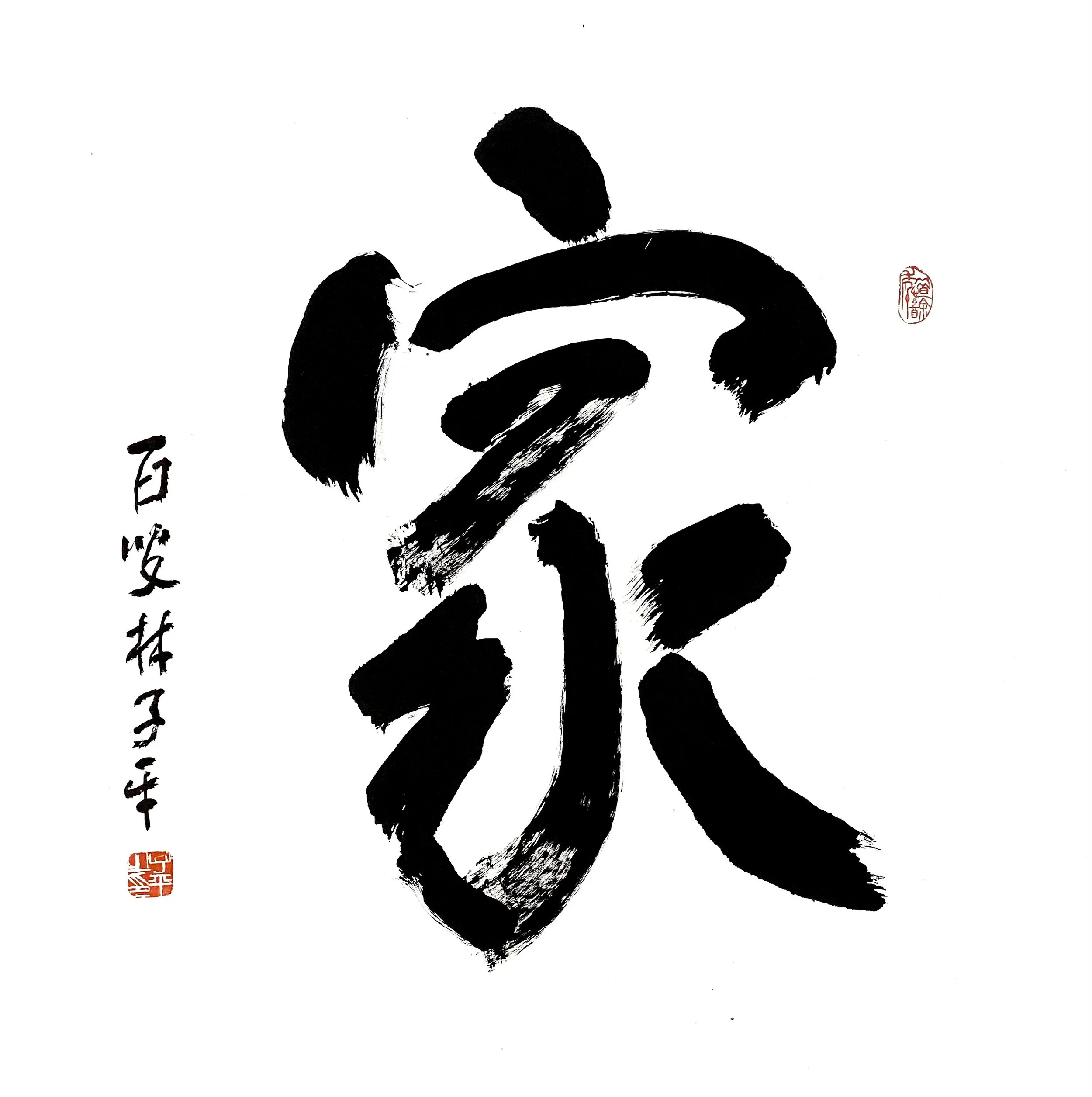
家
Home
97x97cm
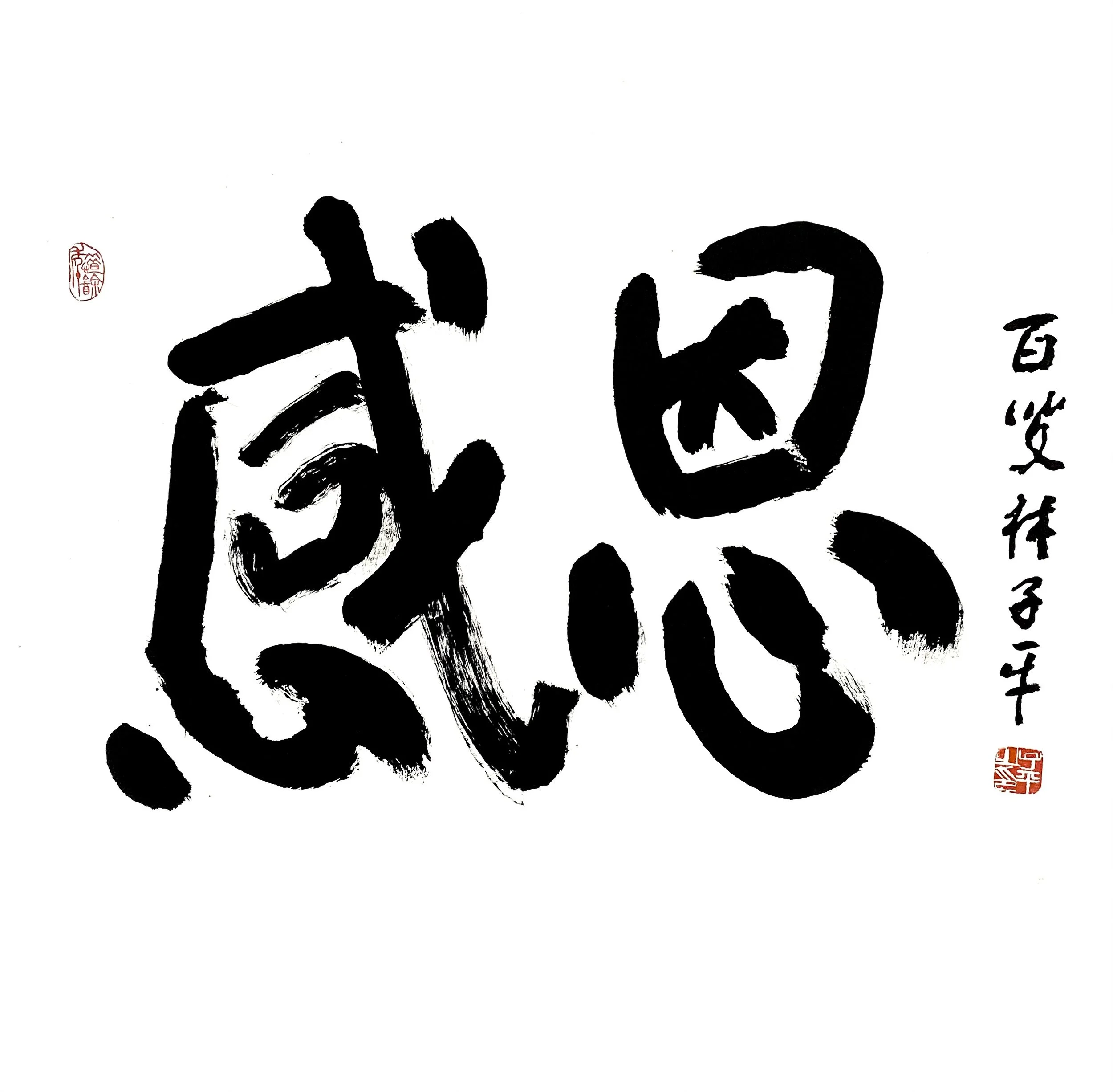
感恩
With Gratitude
93x96cm
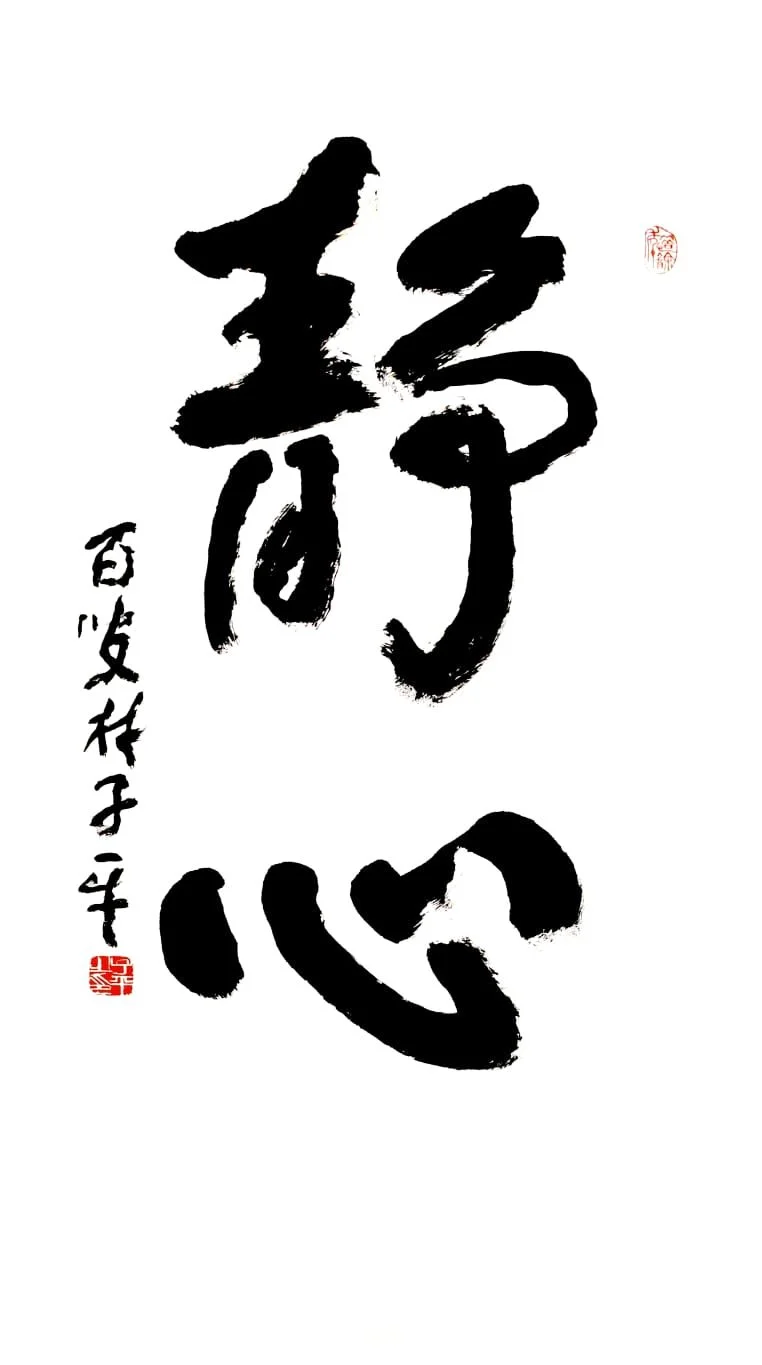
静心
Inner Peace
138x70cm
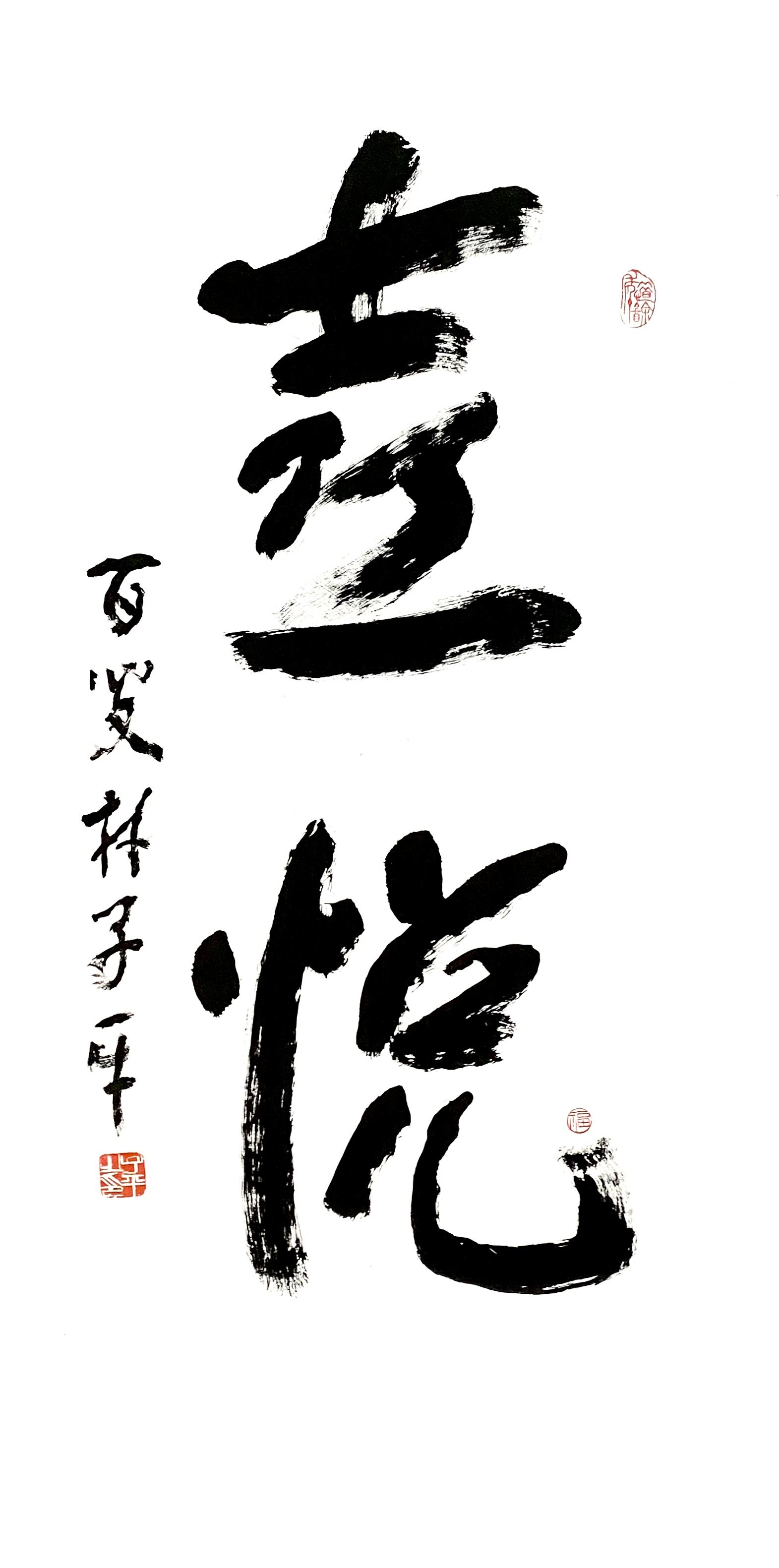
喜悦
Joy
138x70cm

翰墨香
Charm of Calligraphy, Literature and Scholarly Culture.
140x70cm

能忍则安
Through Patience Comes Peace
138x65cm
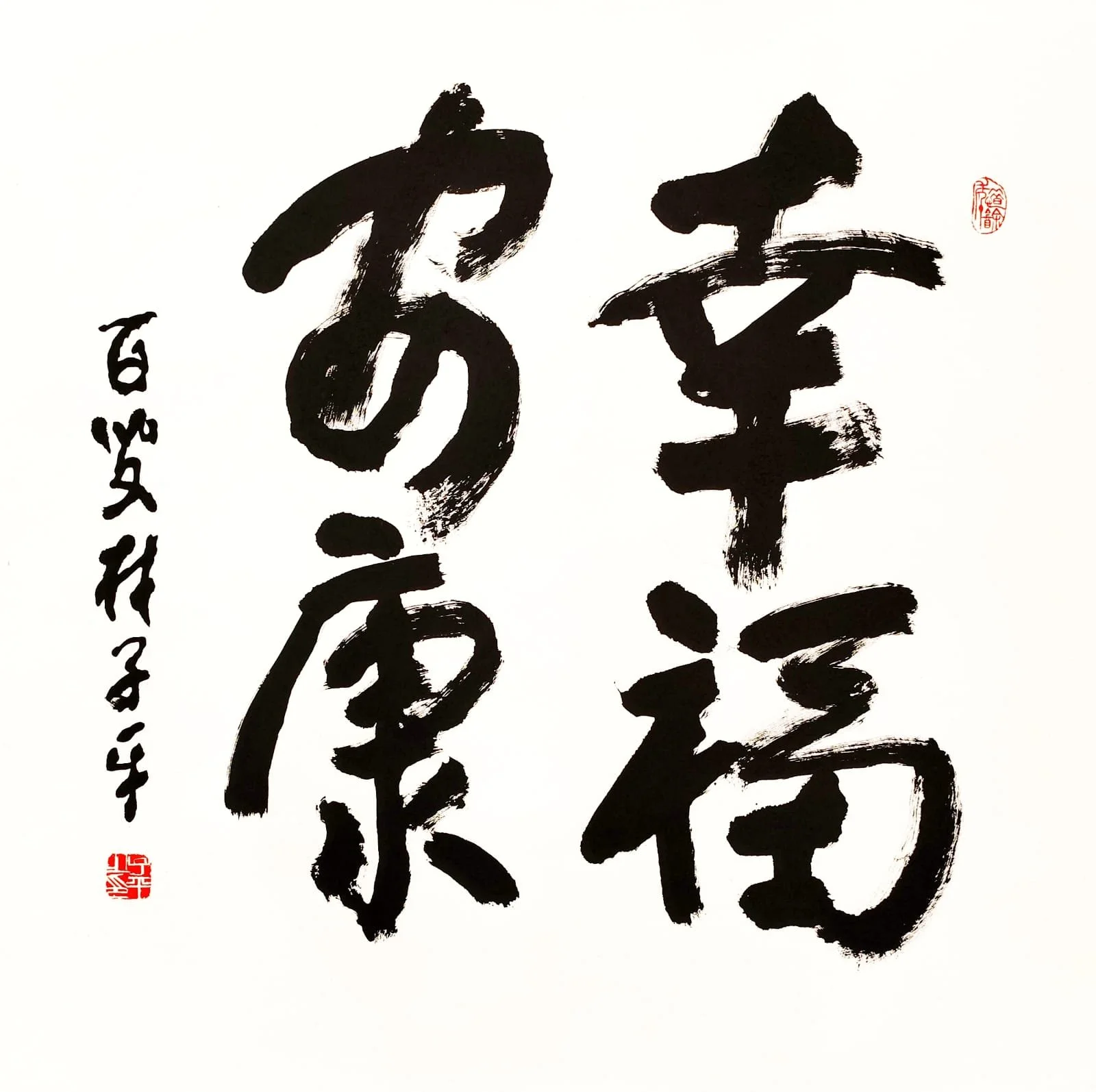
幸福安康
Bliss Peace and Good Health
96x99cm
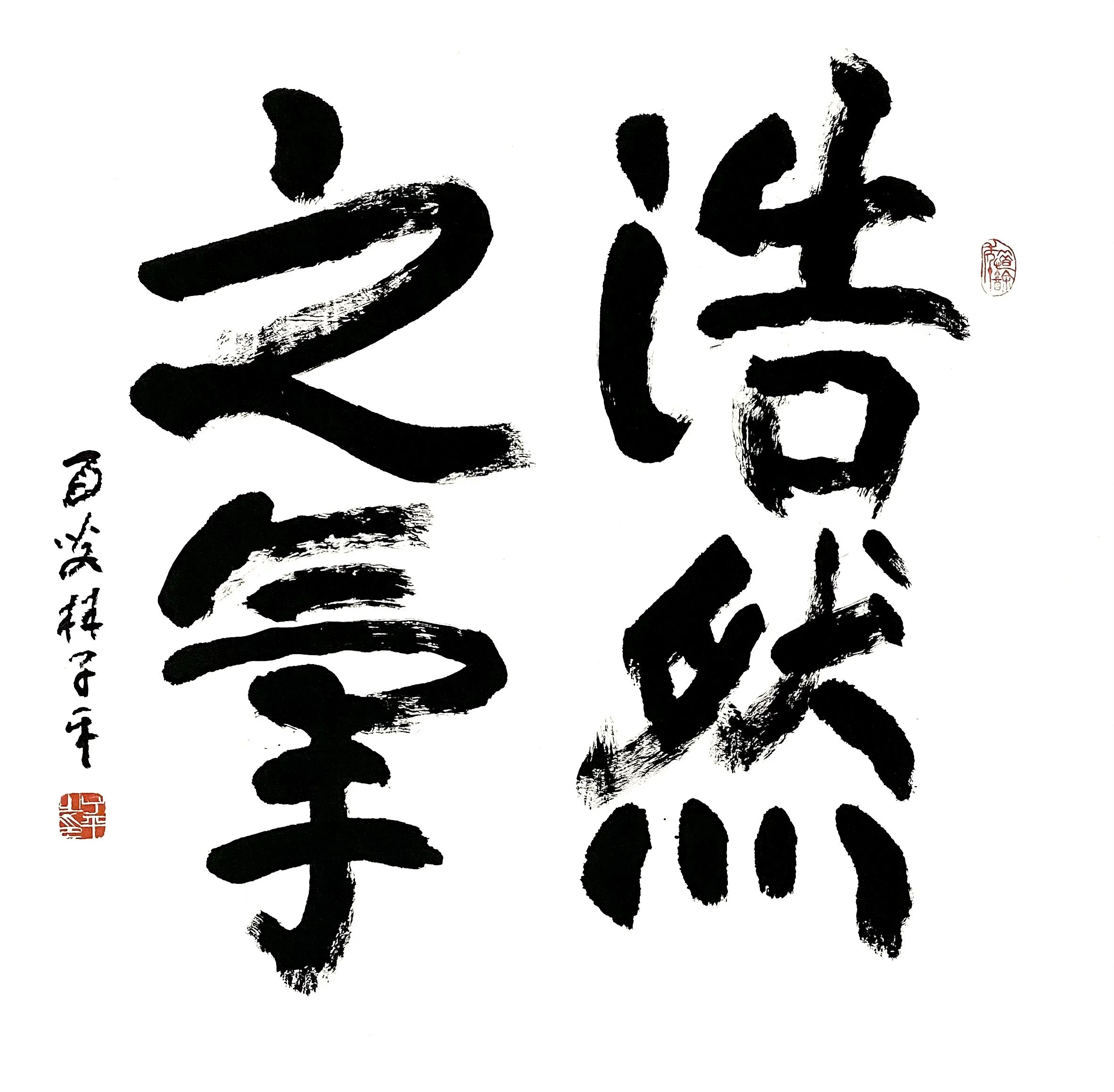
浩然之气
A Spirit of Righteousness
96x97cm
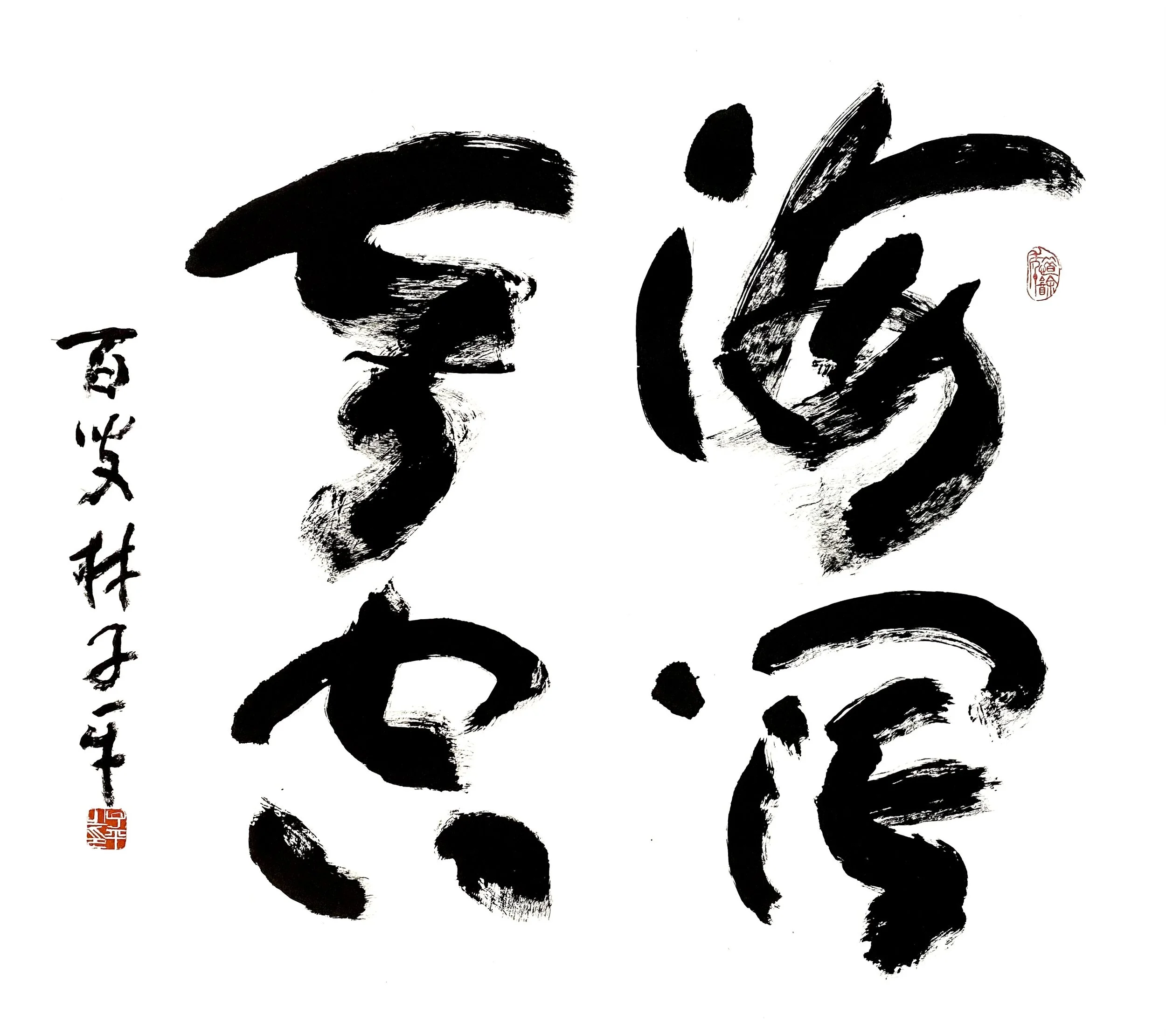
海阔天空
Boundless Horizons
100x113cm
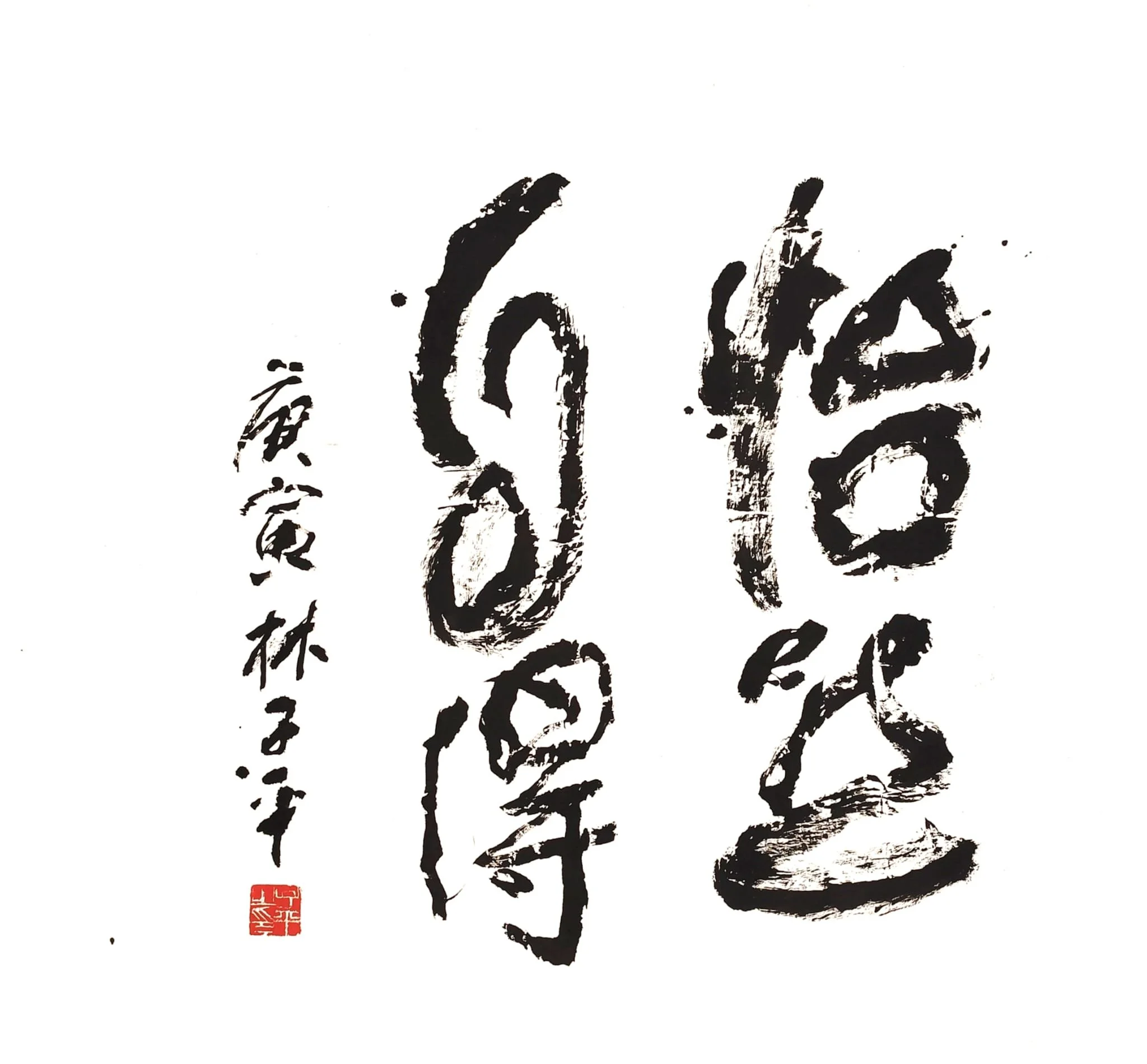
怡然自得
Content and At Ease
88x95cm
2010
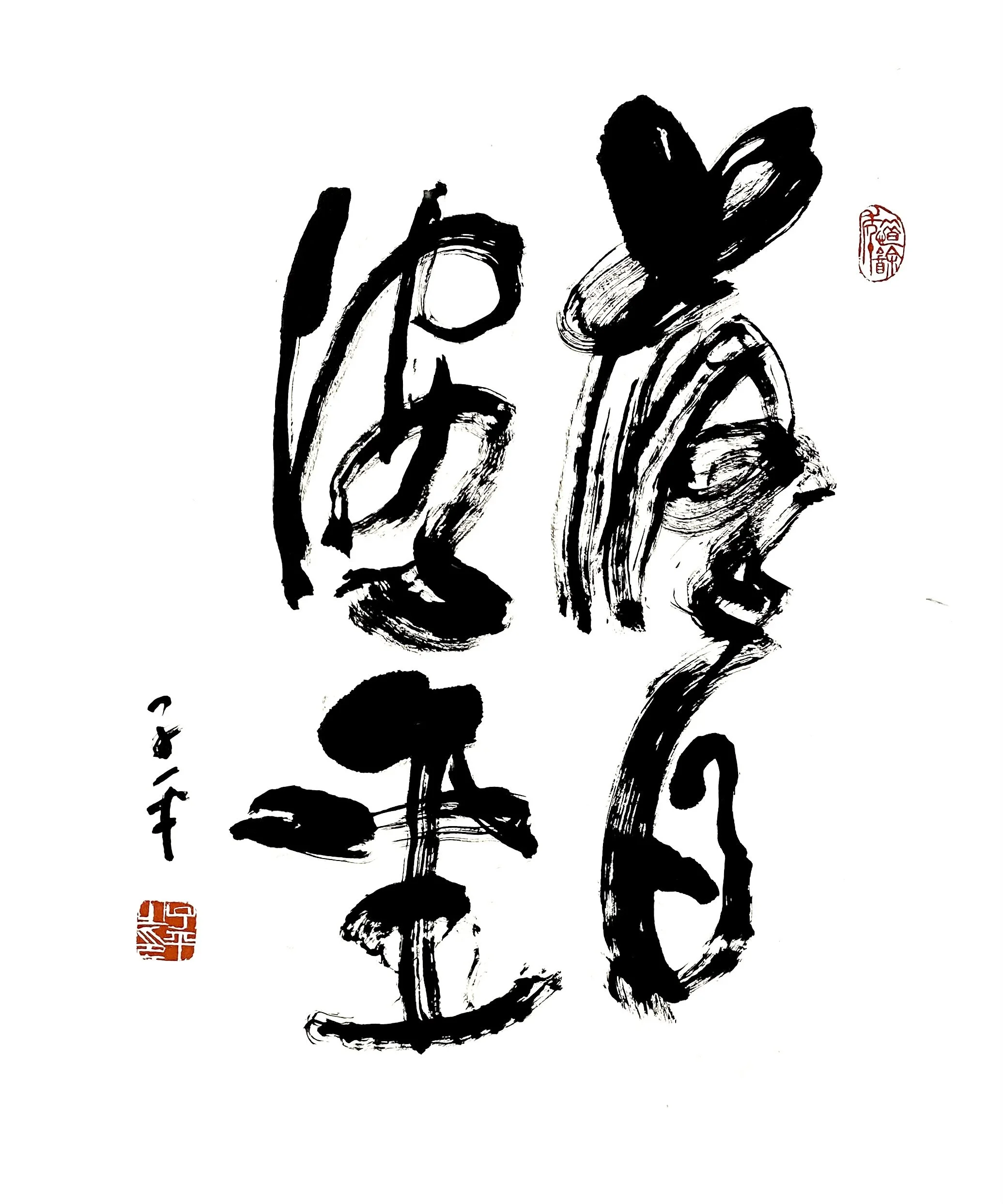
落日熔金
Golden Sunset
80x69cm
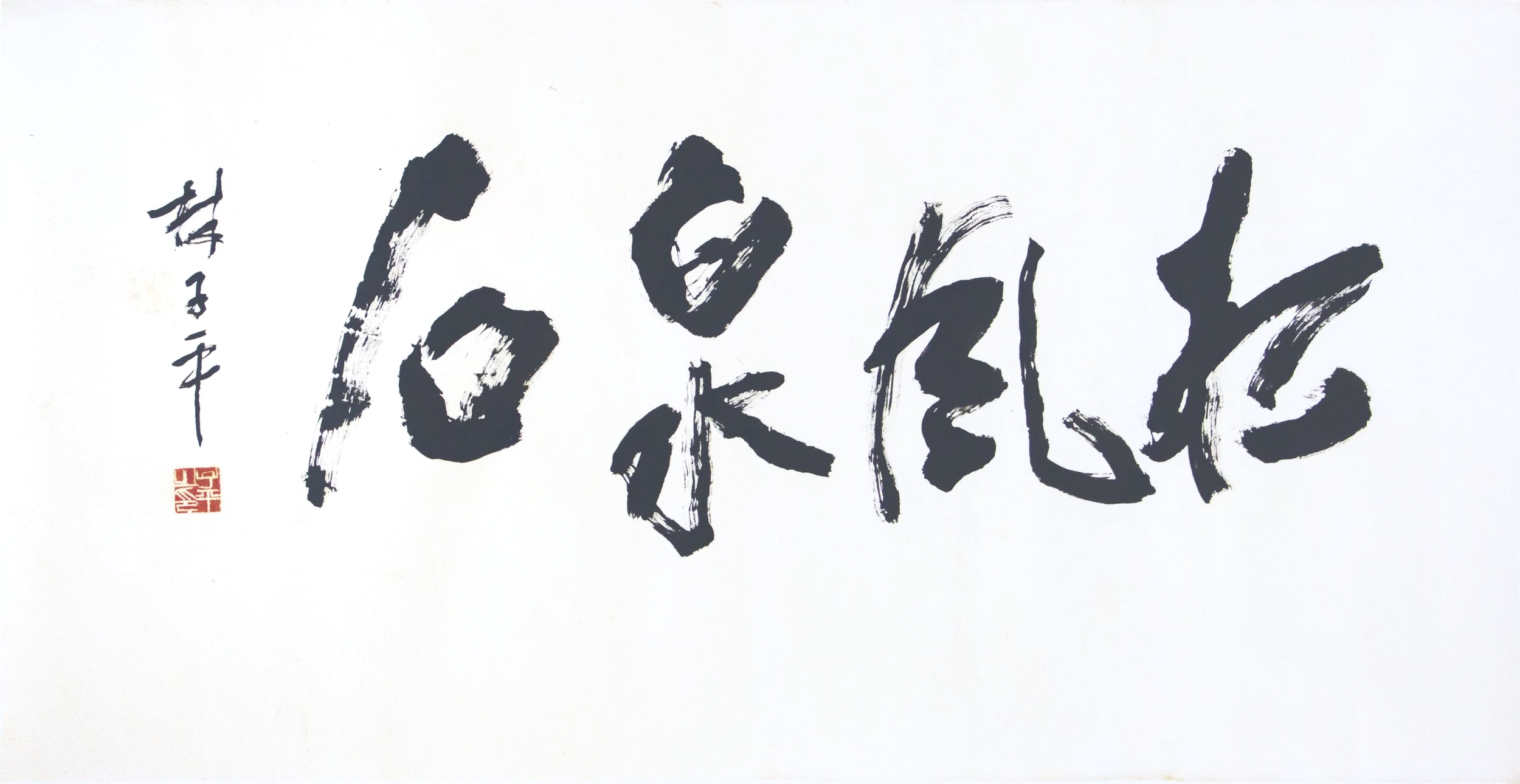
松风泉石
Harmony Of Nature
69x137cm
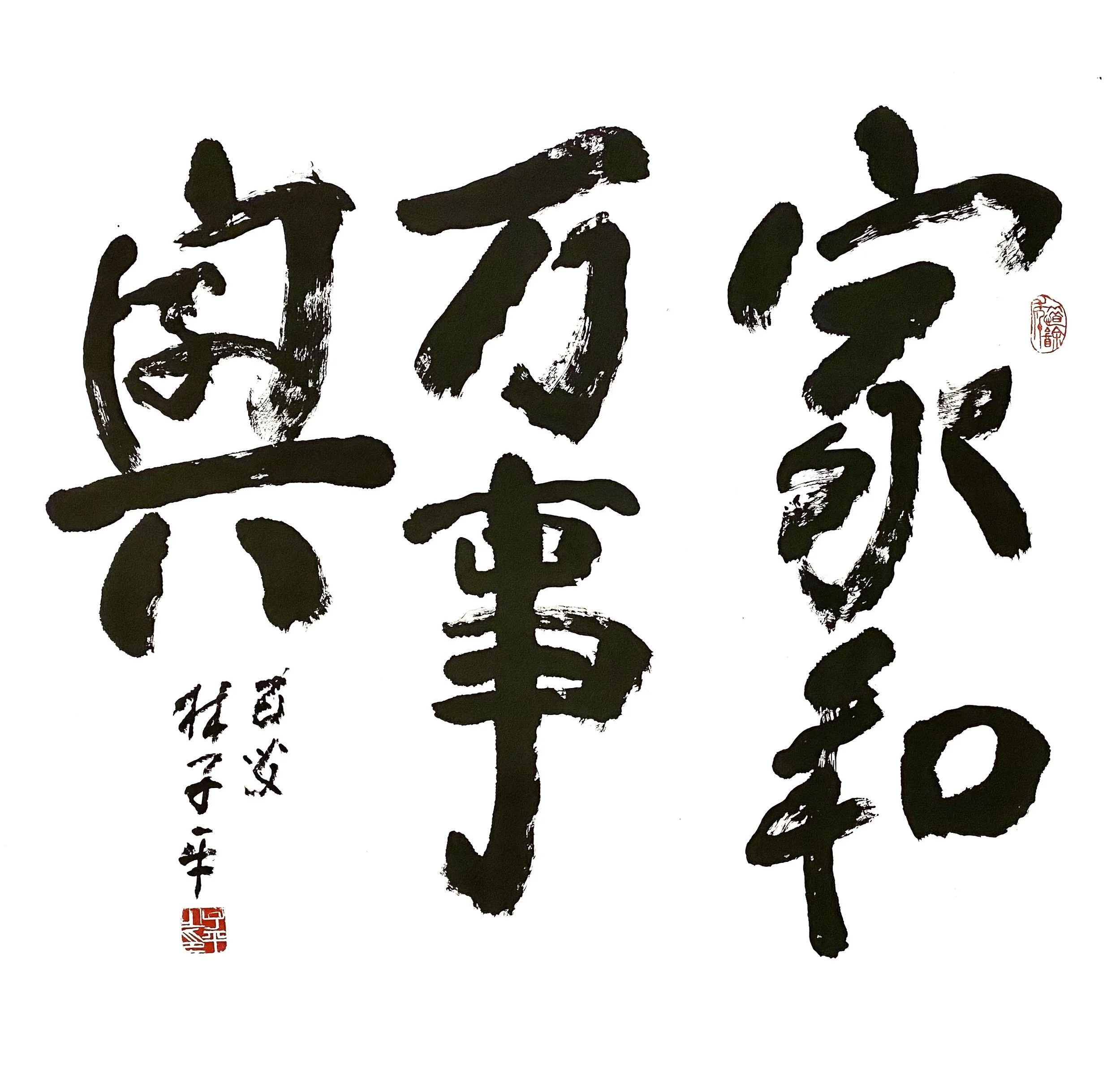
家和万事興
A Harmonious Family, A Prosperous Life
96x97cm
传统书法始终是林子平艺术创作的重要根基。
他的黑白书法讲究笔墨的节奏、力度与行气,并经常将古典诗词转化为充满视觉张力的书法作品。
他尤其喜爱唐宋诗词,从友情、山水、思乡到家国情怀,这些跨越千年的文字为他的创作提供了丰富的精神养分。
对林子平而言,诗词并不只是需要被书写的文字,而是可以通过毛笔的速度、力度与线条来表达其中的情感。
因此,他的书法既是文学,也是视觉艺术。

《故司隶校尉犍为杨君颂》
Eulogy for Yang Huan
故司隶
校尉楗
为扬君颂
汉石颂碑额
The text was essentially a public memorial celebrating the reopening of an important ancient mountain route, and it later became one of the great masterpieces of Han-dynasty calligraphy.
The central figure celebrated in the inscription was 杨涣 (Yang Huan) who served as 司隶校尉, a senior official responsible for the administration and supervision of the capital region. Yang Huan repeatedly petitioned the emperor to restore the Baoxie Road and reopen the passage through Shimen. There was opposition to his proposal, but he persisted and eventually succeeded in gaining imperial approval.
About two decades later, 王升 (Wang Sheng), then Governor, travelled along the mountain route and saw the restored passage. Moved by Yang's achievement, Wang composed a formal 颂 (song)—a eulogy or celebratory ode—and had it carved into the rock at Shimen.
The inscription later became celebrated as a masterpiece of Han clerical calligraphy.
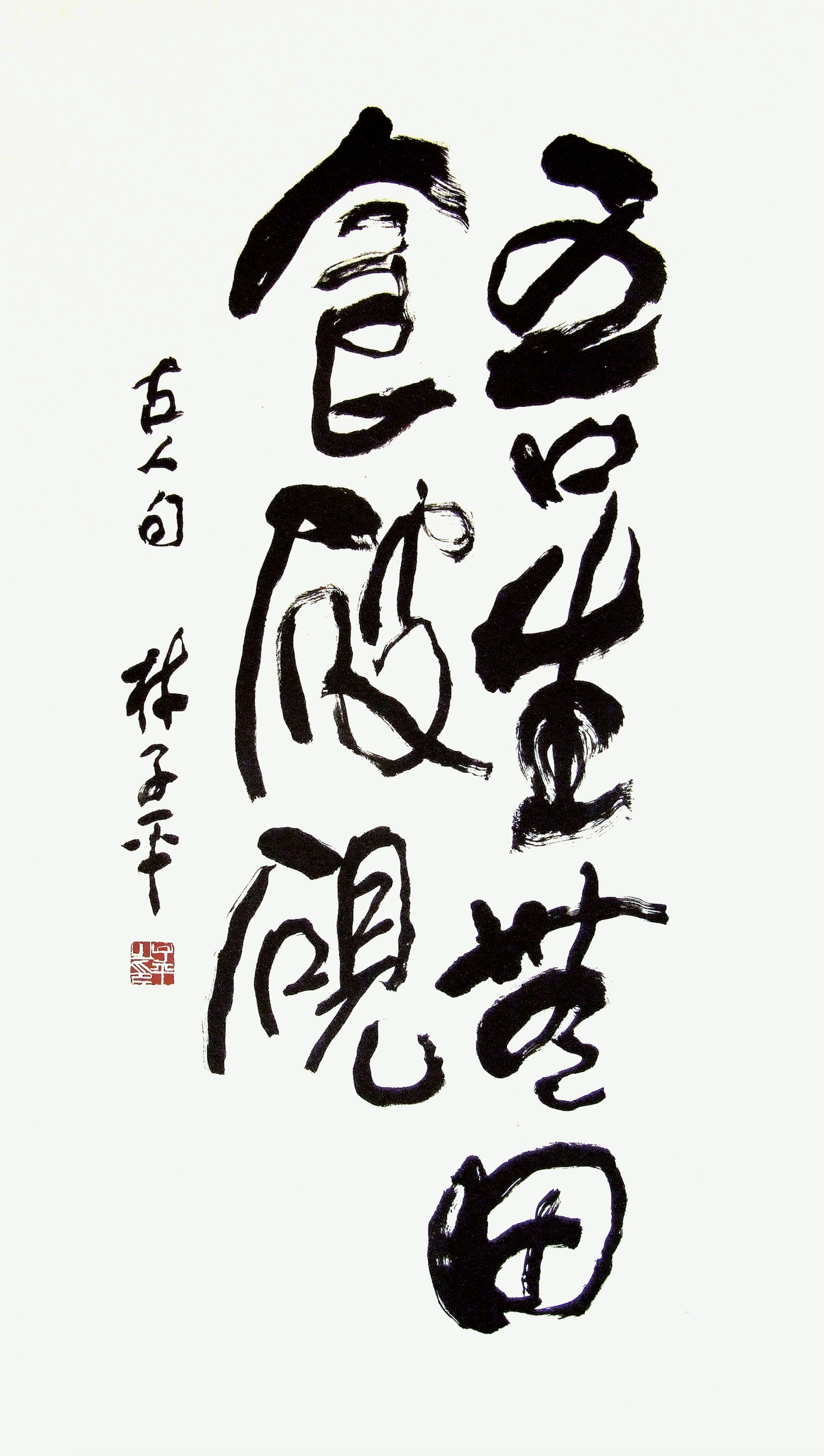
吾生无田食破砚
A Lifetime of Scholarly Pursuits
140x70cm

韦应物
《淮上喜会梁州故人》
江汉曾为客
相逢每醉还
We once wandered the Jianghan as travellers;
Whenever we met, we drank and laughed until we parted
The poem describes the poet’s unexpected reunion with an old friend after about ten years apart. The writer was reminiscing about spending time with an old friend and the memory makes him realise how time has passed so quickly. The reunion is therefore both joyful and melancholy. Chinese literary commentary often describes the poem as 悲喜交集 — joy and regrets intertwined.
140x70cm

刘长卿
《自夏口至鹦鹉洲夕望岳阳寄元中丞》
汀洲无浪复无烟,
楚客相思益渺然。
汉口夕阳斜渡鸟,
洞庭秋水远连天。
The river is calm and serene
As a traveller, my thoughts of my distant friend grows.
Birds fly across the evening skies
The autumn waters of Dong Ting stretch far into the distance.
The poem was written by Liu Chang Qing, a Tang dynasty poet travelling through the Jiang Han region, looking towards Yue Yang and Lake Dong Ting, while thinking of Yuan Zhong Cheng, a friend who was also caught up in the challenges of official life.
140x70cm

柳宗元
《江雪》
千山鸟飞绝,
万径人踪灭。
孤舟蓑笠翁,
独钓寒江雪。
In an immense, expansive landscape.
A fisherman in a rain cloak and bamboo hat is fishing in the snowy river.
The fisherman can be read as someone who refuses to be defeated by his circumstances.
Despite the cold, he remains where he is, quietly holding to his own principles.
140x70cm
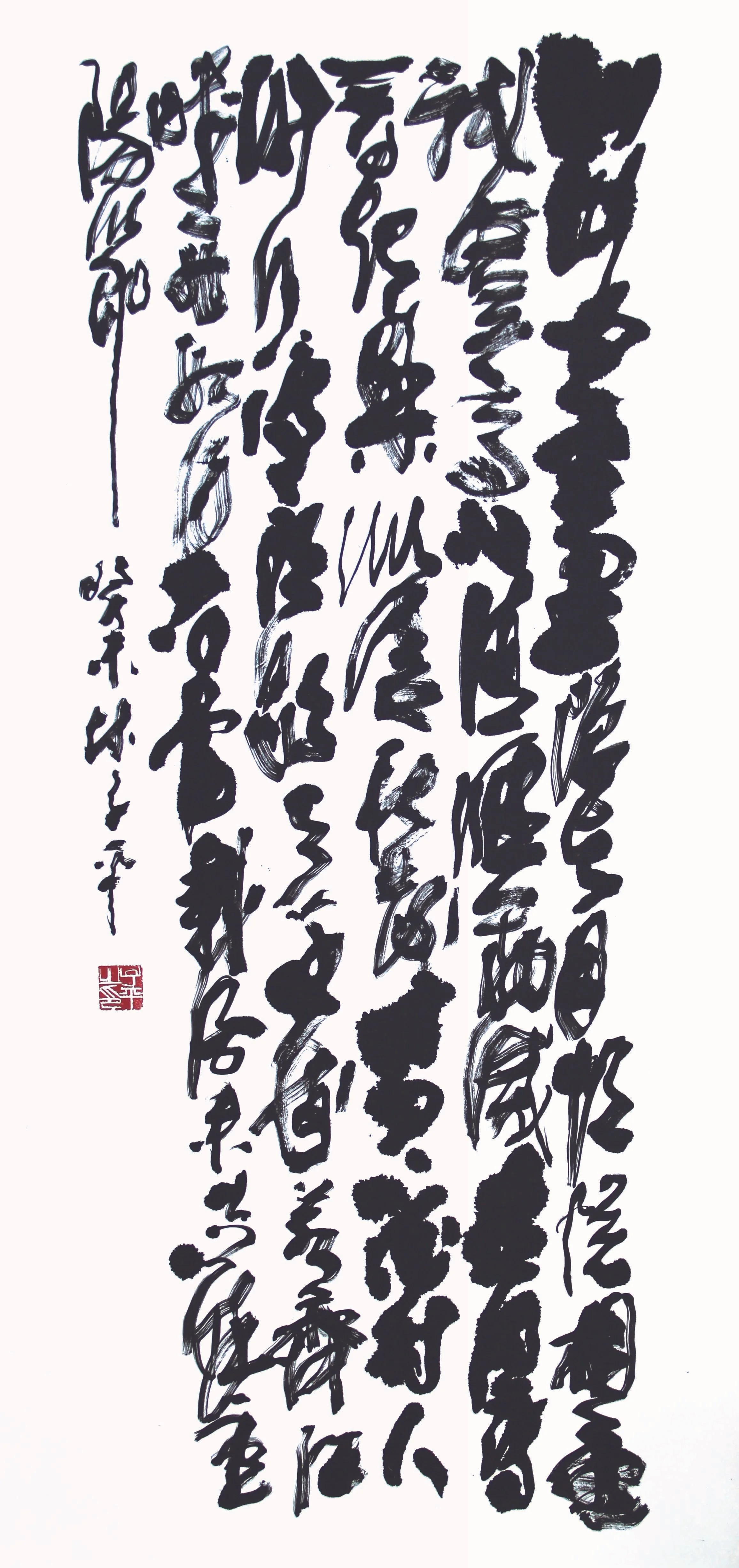
孟浩然
《九月九日岘山寄张子容》
北山白云里,隐者自怡悦。
相望试登高,心随雁飞灭。
愁因薄暮起,兴是清秋发。
时见归村人,沙行渡头歇。
天边树若荠,江畔洲如月。
何当载酒来,共醉重阳节。
This is a poem about friendship and longing for a friend. The poet Meng Haoran climbs a mountain in autumn and looks into the distance, hoping to see his friend Zhang Wu. He sees the beautiful autumn landscape, but his friend is absent. It represents the poet's wish for reunion, friendship, wine, autumn scenery and shared happiness.
140x70cm
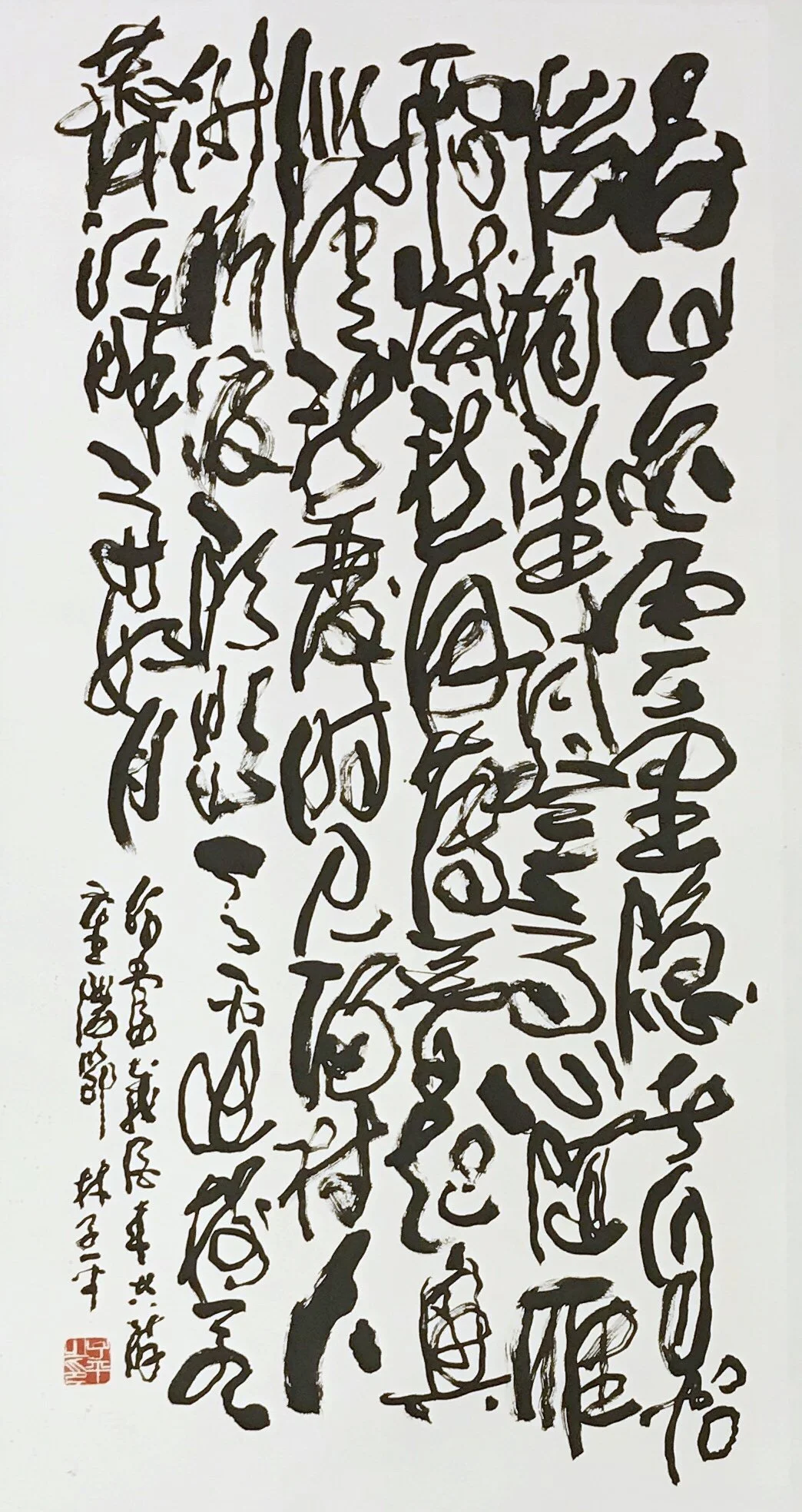
孟浩然
《九月九日岘山寄张子容》
北山白云里,隐者自怡悦。
相望试登高,心随雁飞灭。
愁因薄暮起,兴是清秋发。
时见归村人,沙行渡头歇。
天边树若荠,江畔洲如月。
何当载酒来,共醉重阳节。
This is a poem about friendship.
The poet Meng Haoran climbs a mountain in autumn and looks into the distance, hoping to see his friend Zhang Wu.
He sees the beautiful autumn landscape, but his friend is absent.
It represents the poet's wish for reunion, friendship, wine, autumn scenery and shared happiness.
140x70cm

不论二米与房山,
巨眼方知破墨难。
曾是扁舟停北固,
夕阳江上数峰寒。
Beyond the styles of Mi and Fang,
Only a discerning eye can grasp the difficulty of ink painting.
Once I rested in a small boat at Beigu,
Watching the evening sun cast its glow upon a few distant, wintry peaks.
This text originated as an inscription by 文嘉, a Ming-dynasty painter, calligrapher and poet.
二米 refers to 米芾 and his son 米友仁 of the Northern and Southern Song periods. They became famous for their distinctive 米点山水, or “Mi-style” landscapes.
房山 refers to 高克恭, a Yuan-dynasty painter whose style was deeply influenced by the Two Mi.
破墨 is a traditional Chinese ink-painting technique in which one layer or tone of ink is applied over another, often while the first layer is still wet, allowing the ink to spread, merge and create subtle variations in tone.
巨眼方知破墨难 is partly a statement about the difficulty of Chinese ink painting itself
曾是扁舟停北固: 北固 (Beigu) refers to Beigu Mountain (北固山) in present-day Zhenjiang, Jiangsu, overlooking the Yangtze River.
夕阳江上数峰寒 refers to evening light, the broad river, distant mountain peaks and a sense of coolness and solitude.
The text is suggesting that a great landscape is not merely copied from another painting. It comes from seeing, experiencing and remembering nature, and then transforming that experience through ink.

苏轼
《水调歌头》
明月几时有?把酒问青天。
不知天上宫阙,今夕是何年。
我欲乘风归去,又恐琼楼玉宇,
高处不胜寒。
起舞弄清影,何似在人间。
转朱阁,低绮户,照无眠。
不应有恨,何事长向别时圆?
人有悲欢离合,月有阴晴圆缺,
此事古难全。
但愿人长久,千里共婵娟。
The poem was written in 1076,when Su Shi was serving as governor. It was the Mid-Autumn Festival, and he drank through the night, becoming deeply moved by the moon and his thoughts of his younger brother.
At that time, the brothers had been separated for about seven years. Su Shi had even hoped to obtain a posting closer to his brother so they could spend more time together, but circumstances prevented this.
The poem’s original emotional core is about family affection.

陆游
《咏梅》
无意苦争春,
一任群芳妒。
零落成泥碾作尘,
只有香如故。
It has no desire to compete with the flowers of spring,
Let the other blossoms envy it as they will.
Even when fallen, crushed into mud and dust,
Its fragrance remains unchanged.
Lu You was strongly patriotic and repeatedly advocated recovering territories lost to the Jin dynasty. His political views often put him at odds with the prevailing political establishment. The plum blossom flower can be read as a reflection of someone who remains committed to his ideals despite challenges.
GOLDEN RESONANCE 金辉
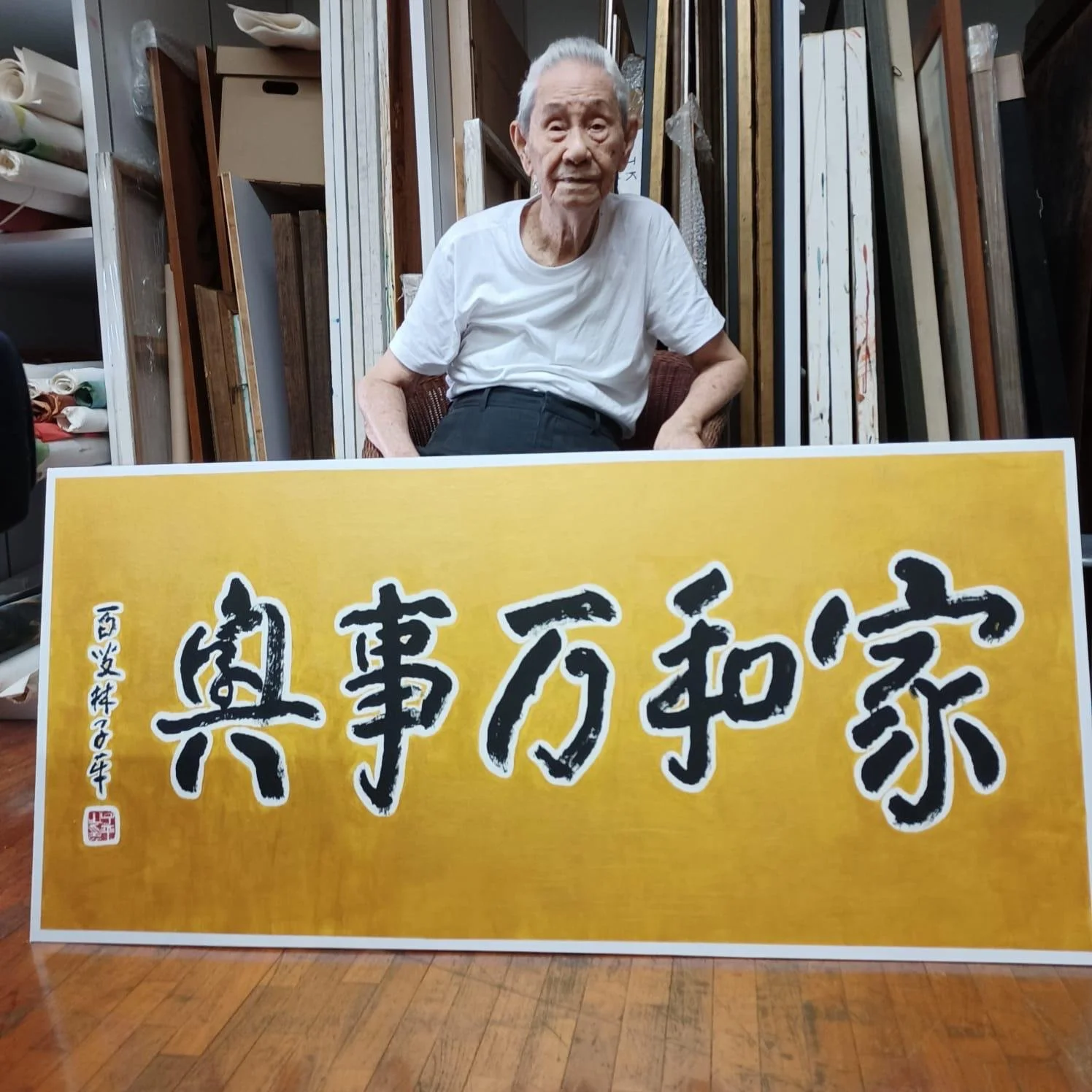
One of the most striking developments in Lim Tze Peng’s calligraphy was his introduction of colour into the traditionally restrained world of ink and paper.
His gold-background calligraphies create an immediate visual impact, placing bold black characters against a luminous field of gold.
The contrast transforms the familiar language of Chinese calligraphy into something contemporary, decorative and almost architectural.
Gold does not merely serve as a background; it changes the atmosphere of the entire work, giving the calligraphy a sense of presence and grandeur.
In these works, Lim demonstrates how a deeply traditional art form can be reimagined without losing the strength and vitality of the brushstroke.
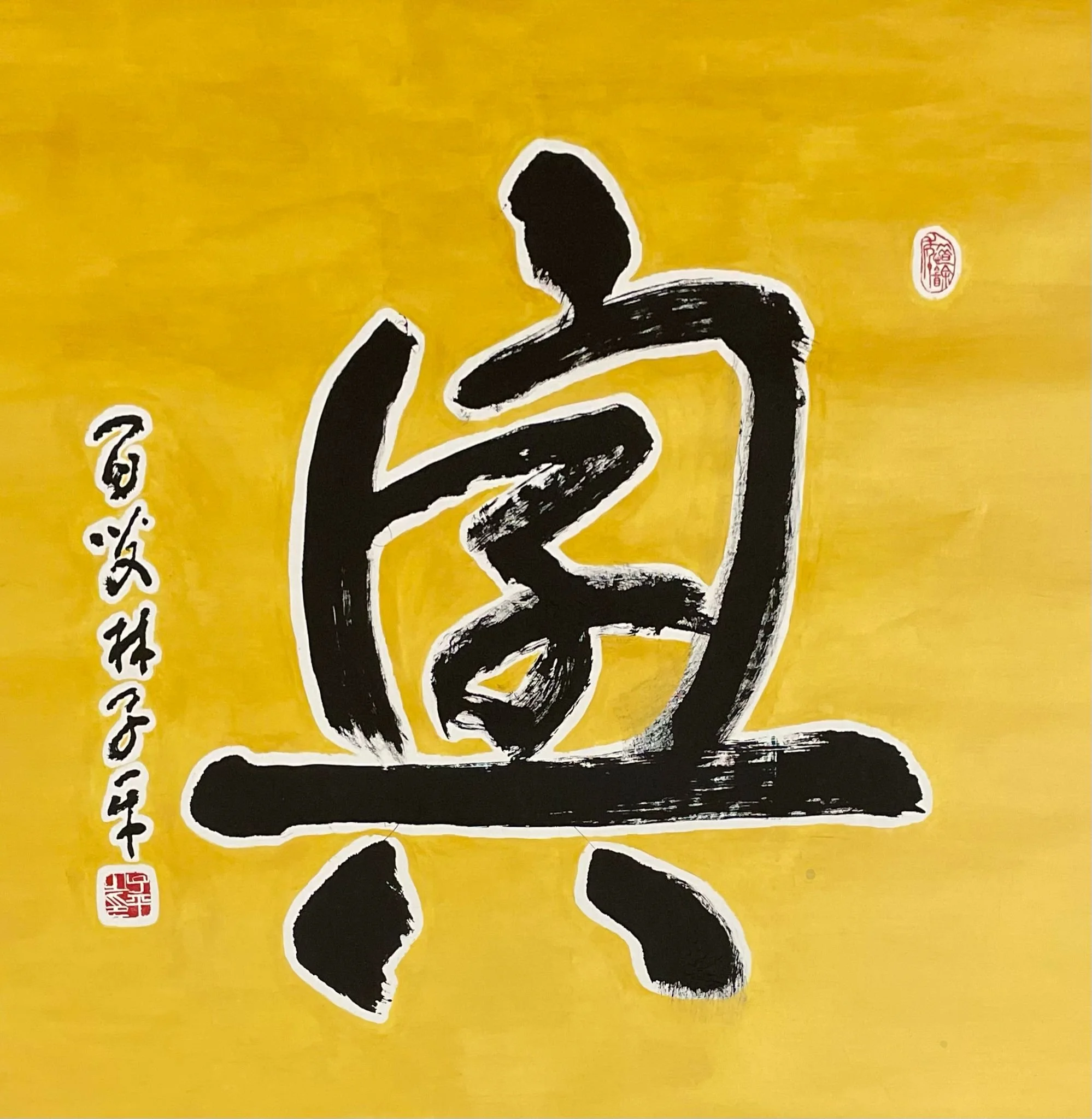
興
Flourishing & Prosperity
96x97cm
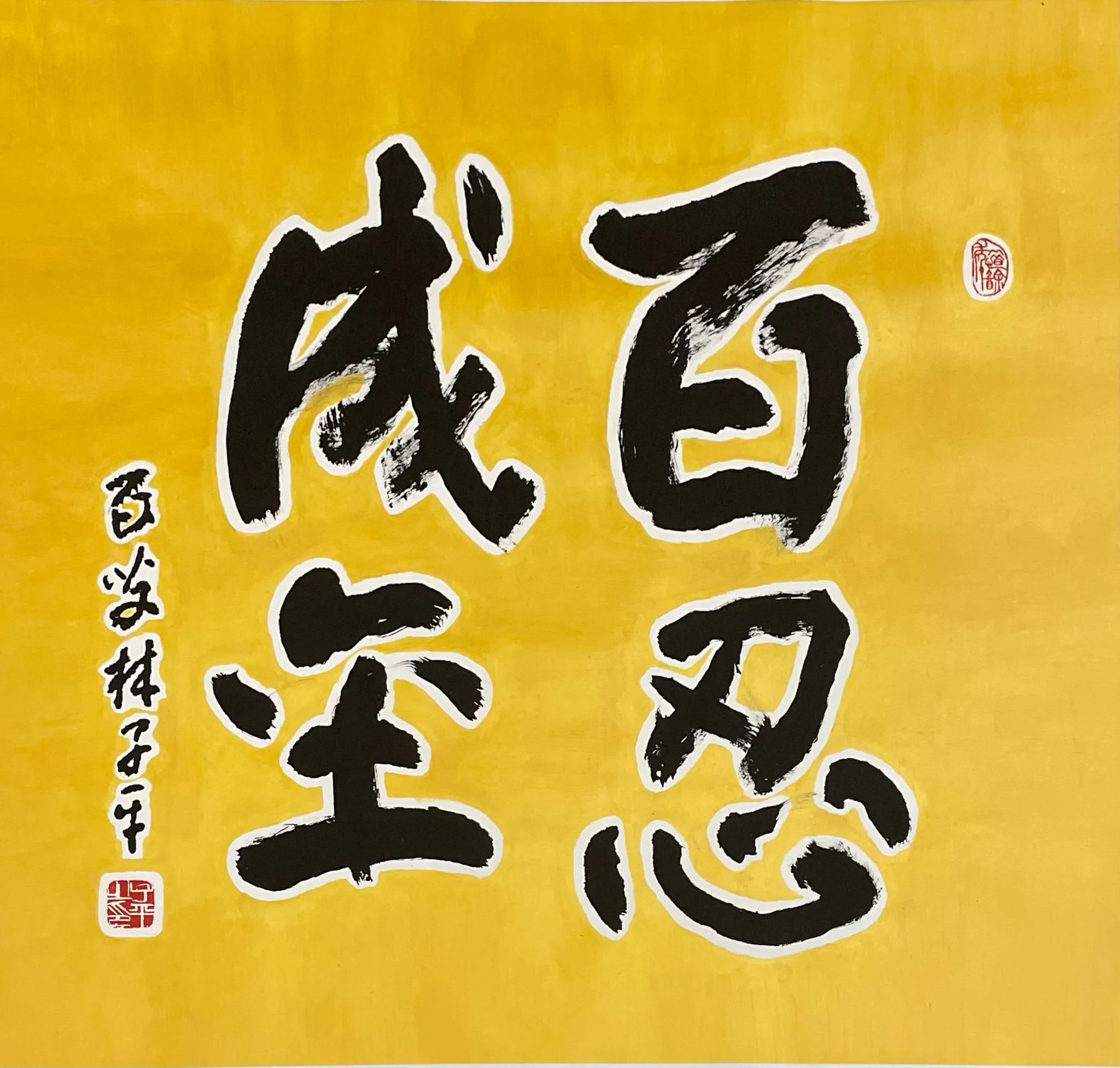
百忍成金
Patience Leads To Success
88x94cm
林子平书法创作中的一个重要转变,是将色彩大胆引入传统水墨书法之中。
金色背景的作品尤其醒目,浓厚的墨色与金色形成强烈对比,使熟悉的汉字呈现出鲜明而现代的视觉效果。
金色不再只是背景,而成为作品气氛与结构的一部分,使书法拥有更强的存在感与气势。
传统的笔墨语言在金色的映衬下显得更为大胆,也更贴近当代审美。
林子平以此证明,传统并非一成不变,而可以在保留笔墨精神的同时不断焕发新的生命力。
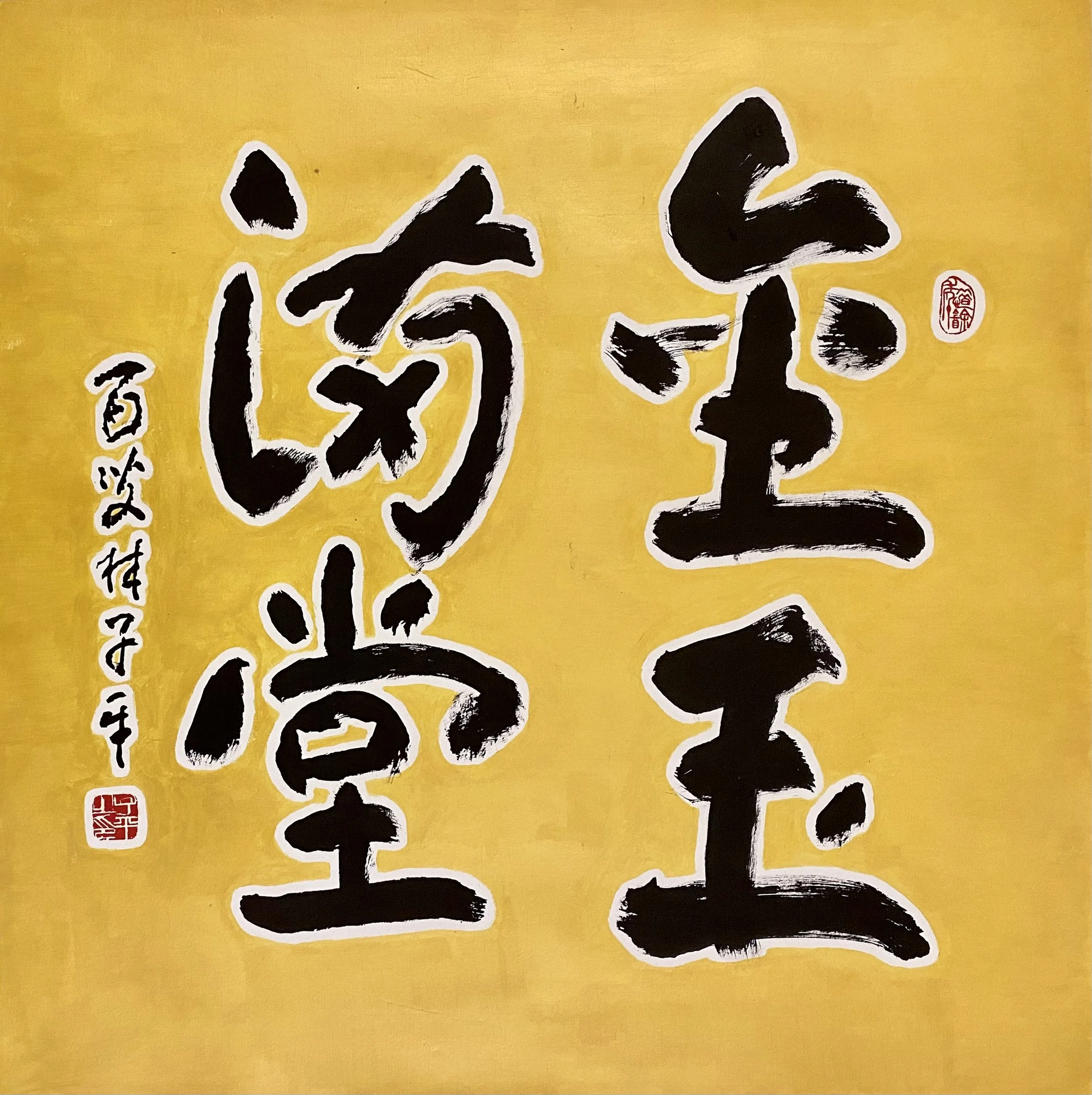
金玉满堂
A Home Filled with Wealth and Blessings
97x97cm
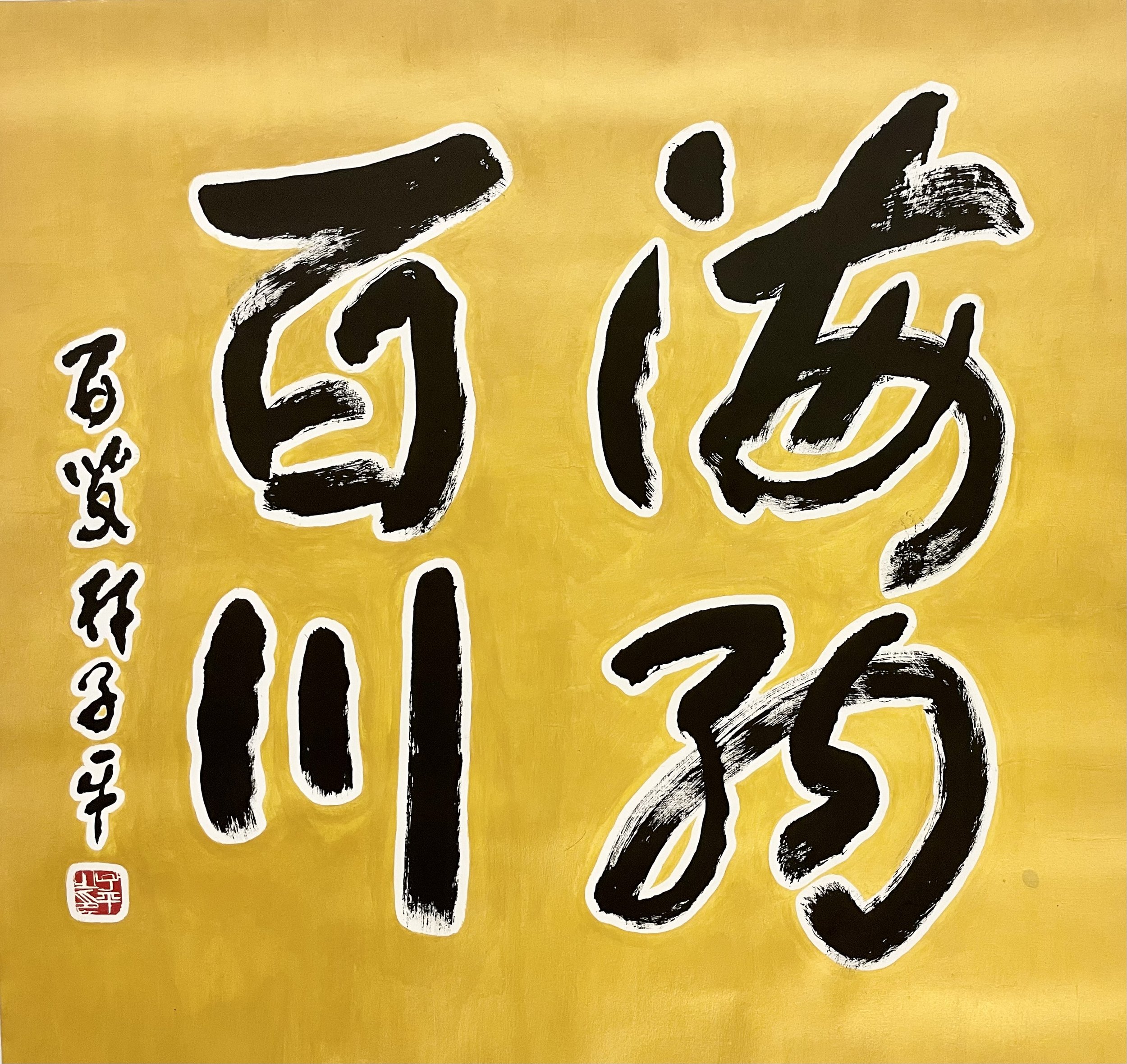
海纳百川
Embracing All, With an Open Heart
92x97cm
COLOURS OF THE BRUSH 彩韵
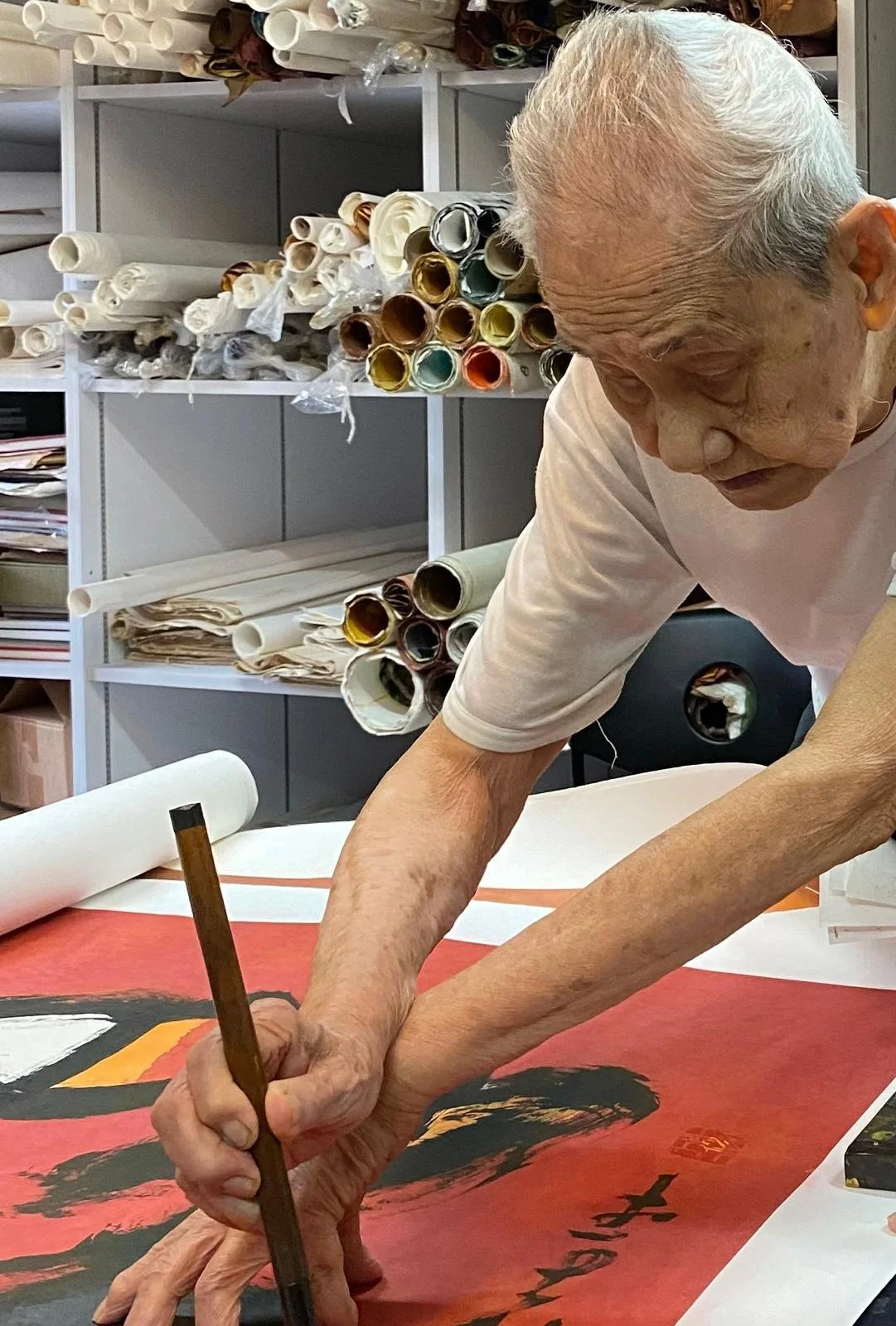
Lim Tze Peng pushed his calligraphy even further by introducing vibrant colours into the space surrounding his written characters.
Blues, reds, yellows and other hues interact with the black brushwork, creating works that are far removed from the conventional image of monochrome calligraphy.
His openness to different artistic traditions, together with his experiences of travelling and looking at art, broadened his visual vocabulary. His two-month residency in Paris in 2000, where he painted extensively from observation, further strengthened his engagement with Western art and modern visual ideas.
Rather than simply adopting Western styles, Lim Tze Peng absorbed what interested him—colour, composition, atmosphere and freedom—and brought these ideas back into his own artistic language. The result was a form of calligraphy that could speak not only to traditional collectors, but also to a younger and more contemporary audience.
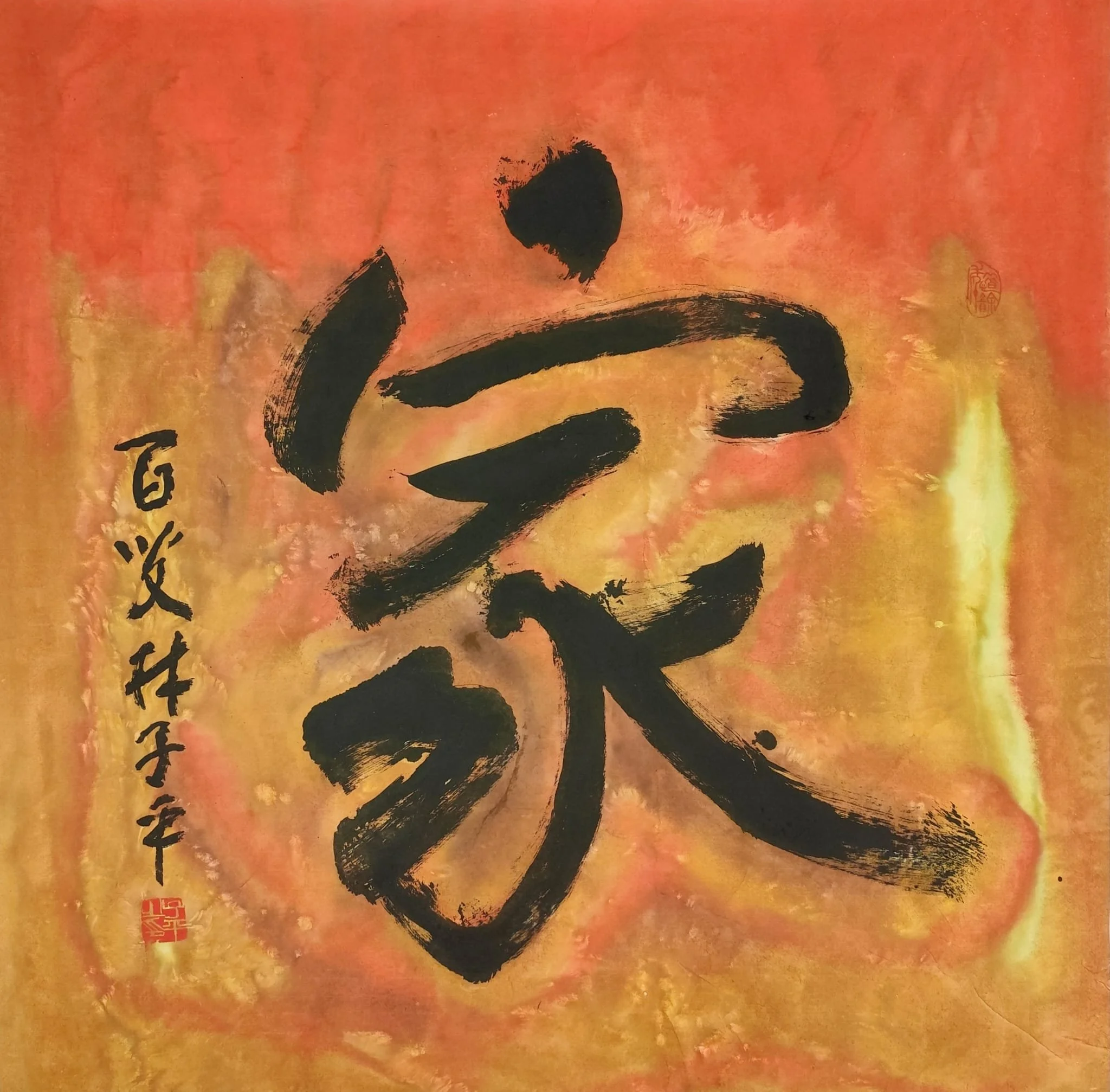
家
Home
99x99cm
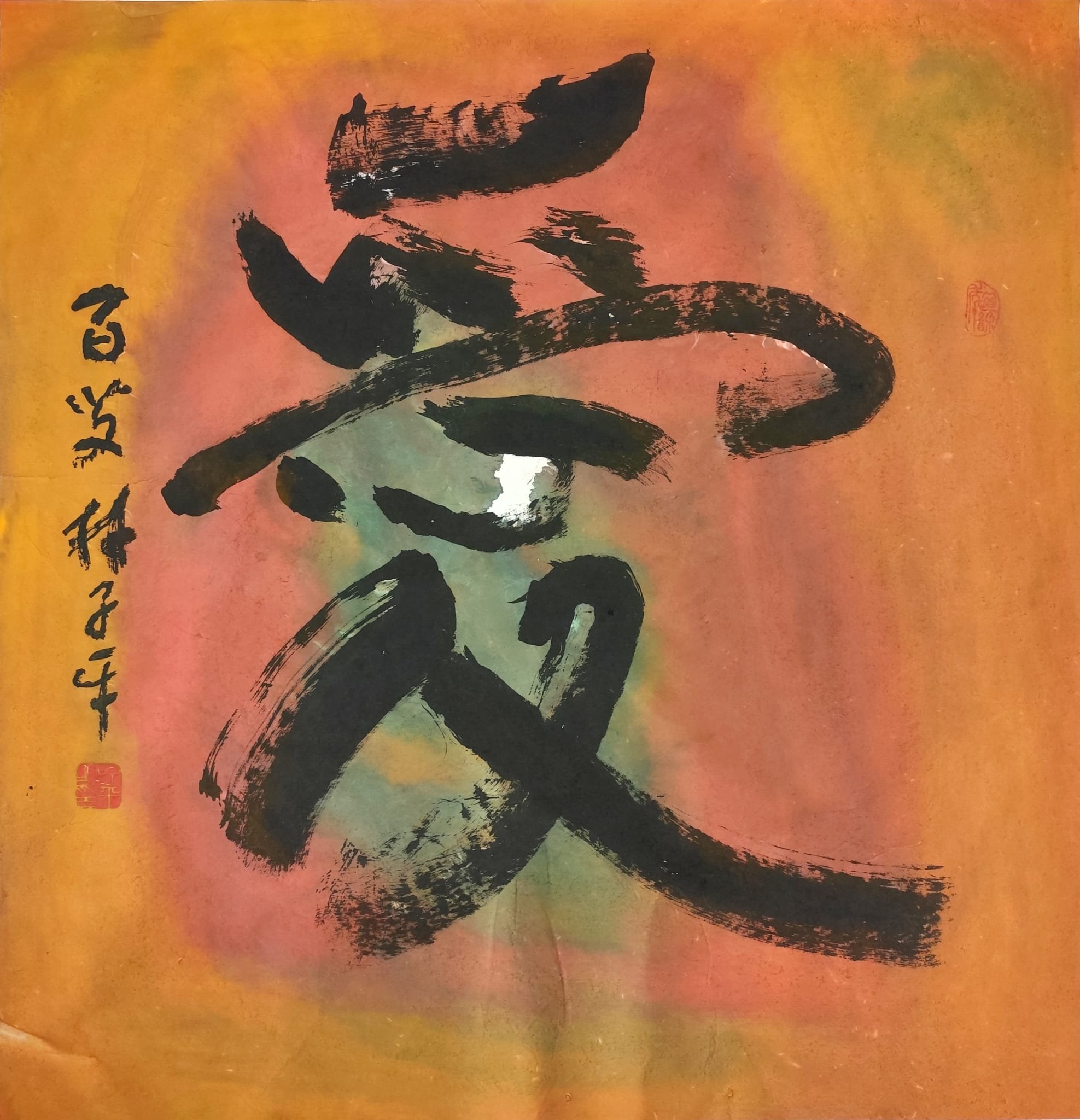
爱
Love
99x96cm
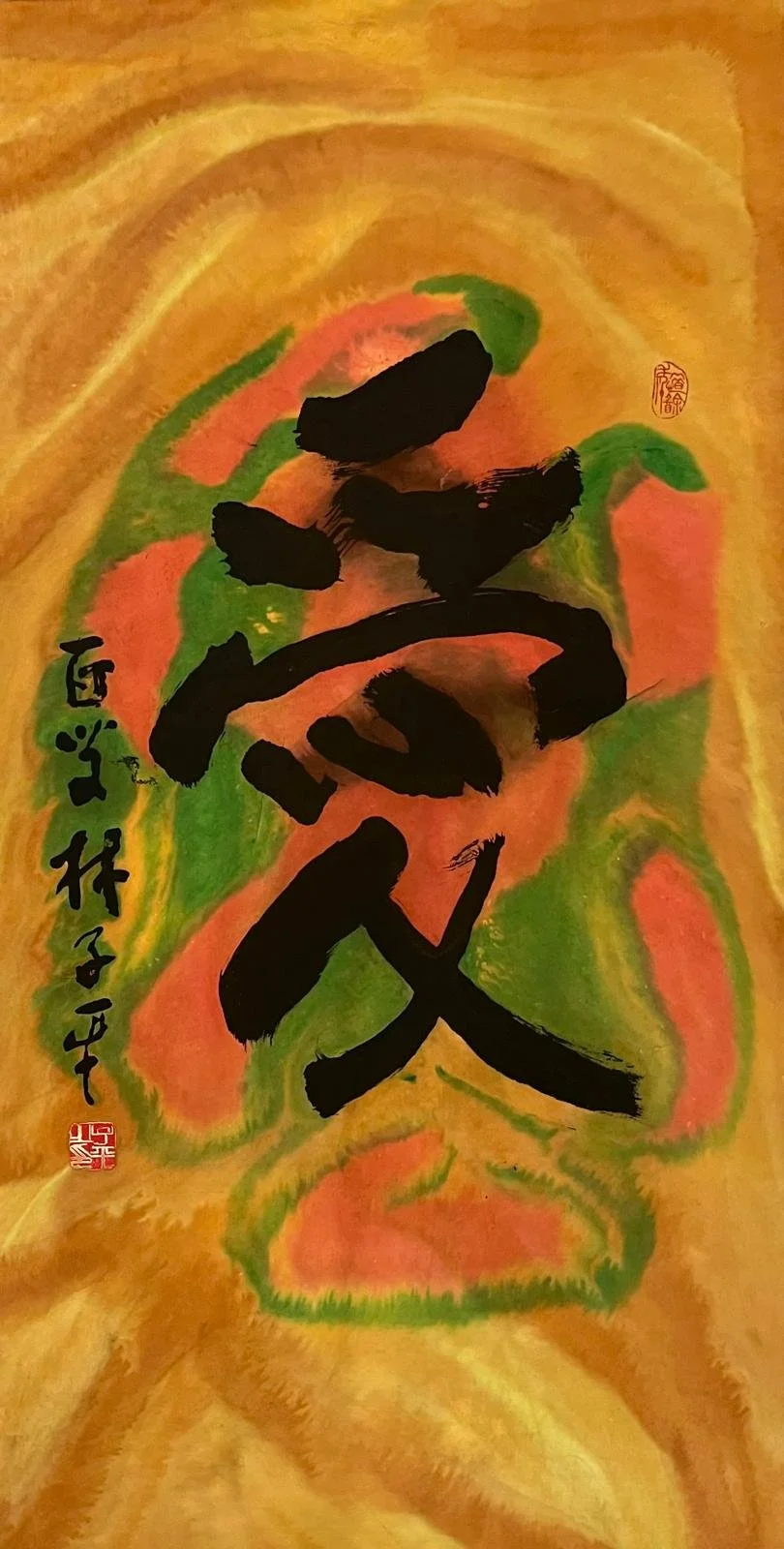
爱
With Love
137x70cm
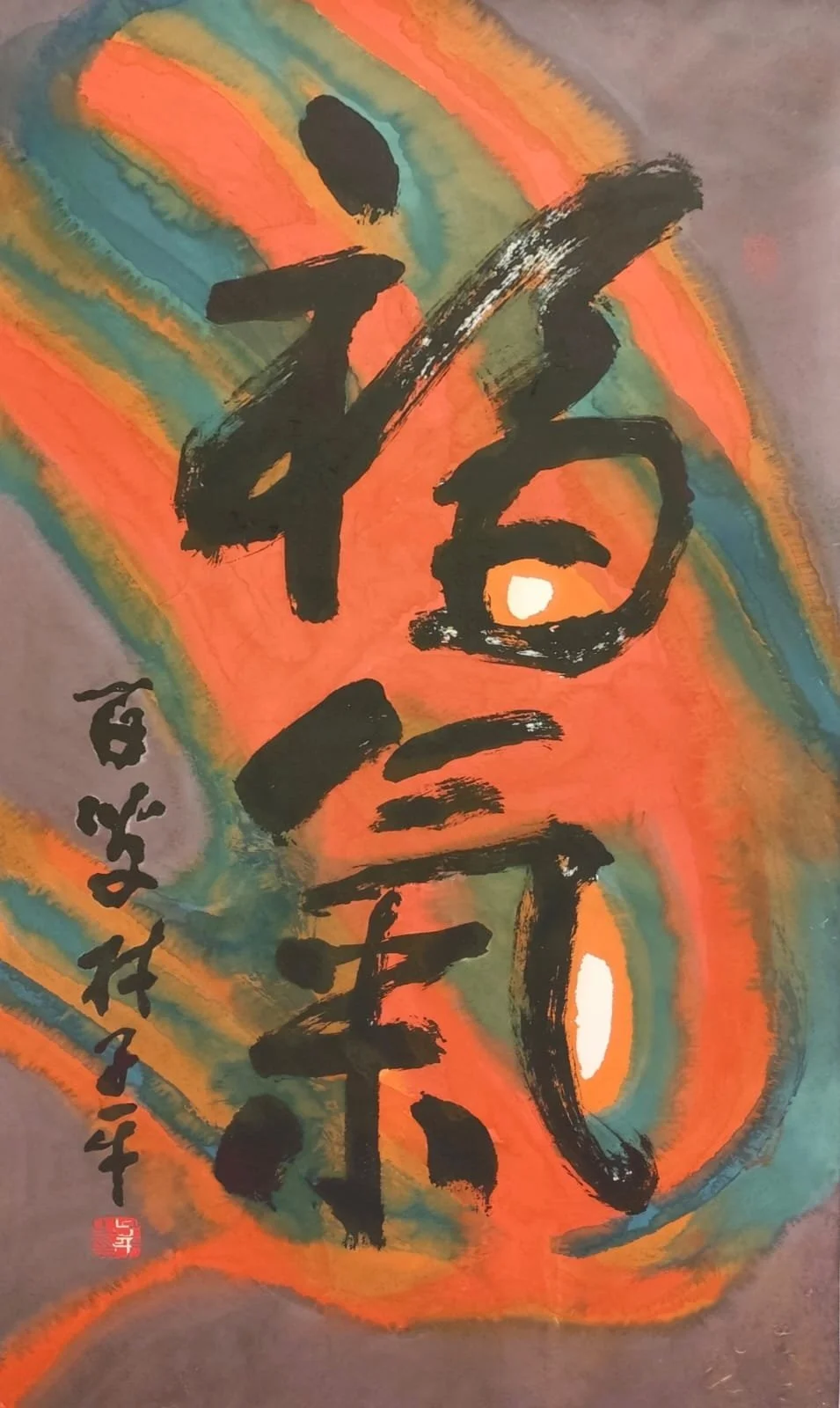
福气
Good Fortune
127x71cm
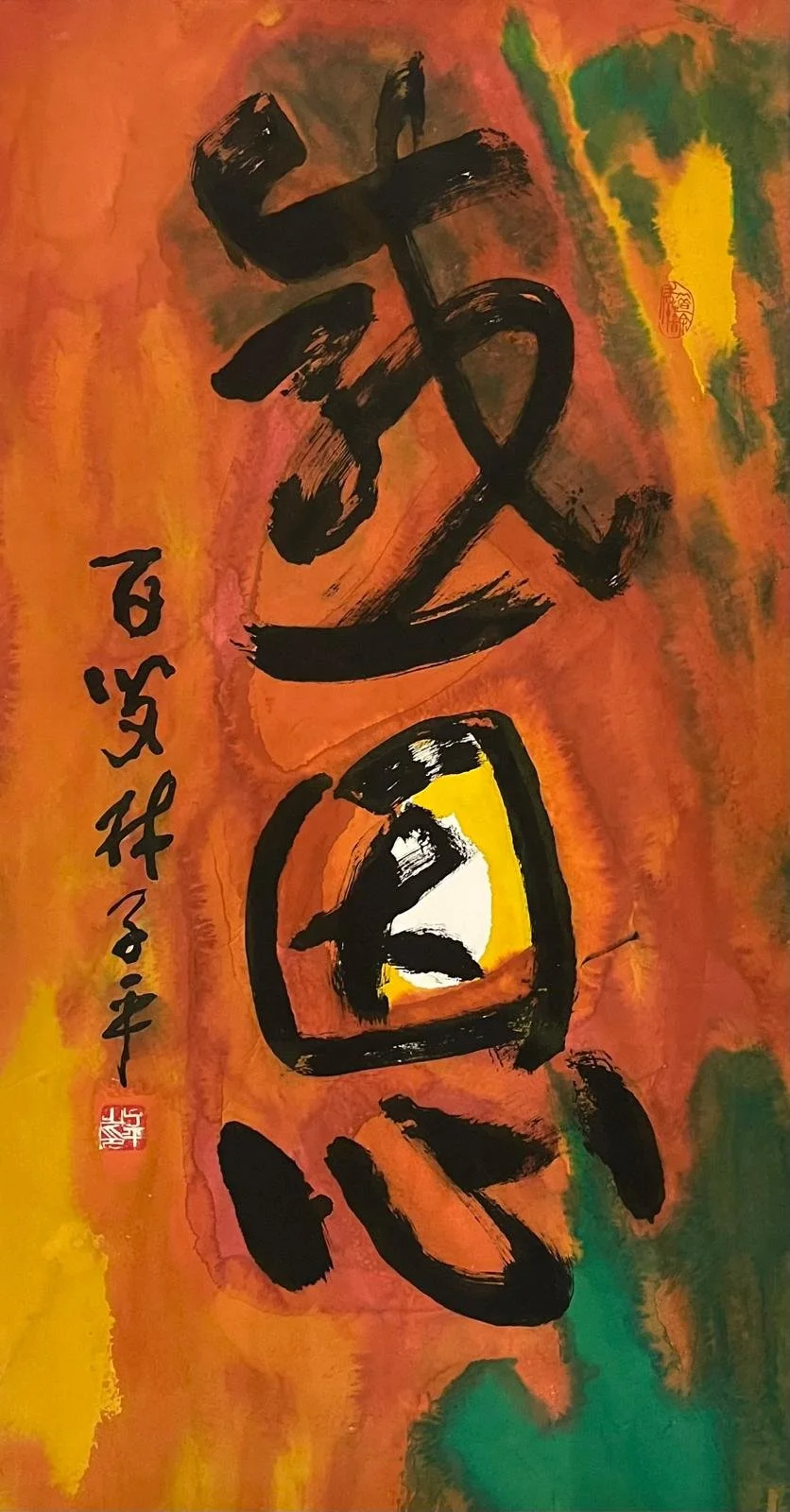
感恩
A Grateful Heart
133x71cm
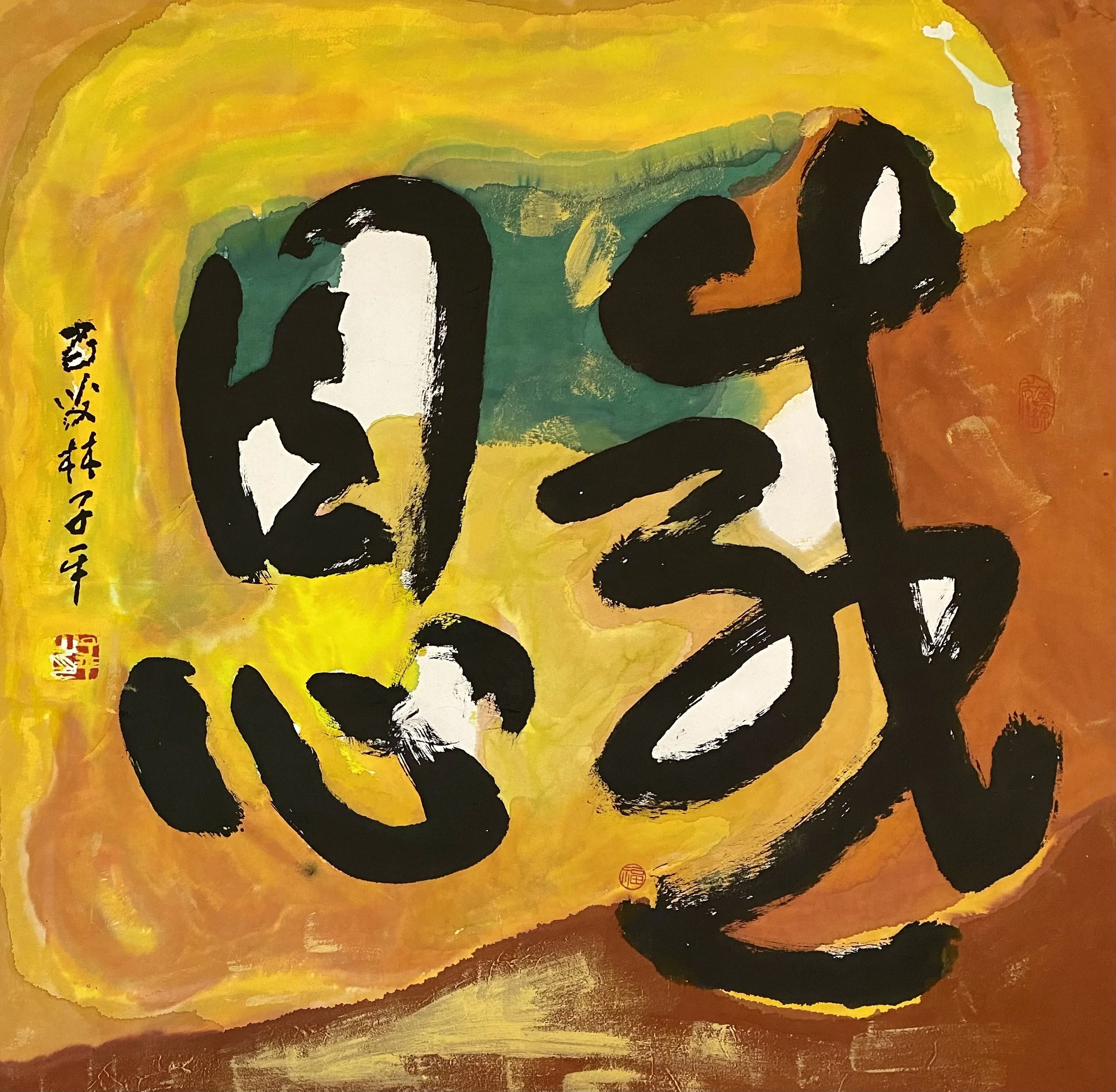
感恩
With Gratitude
94x95cm
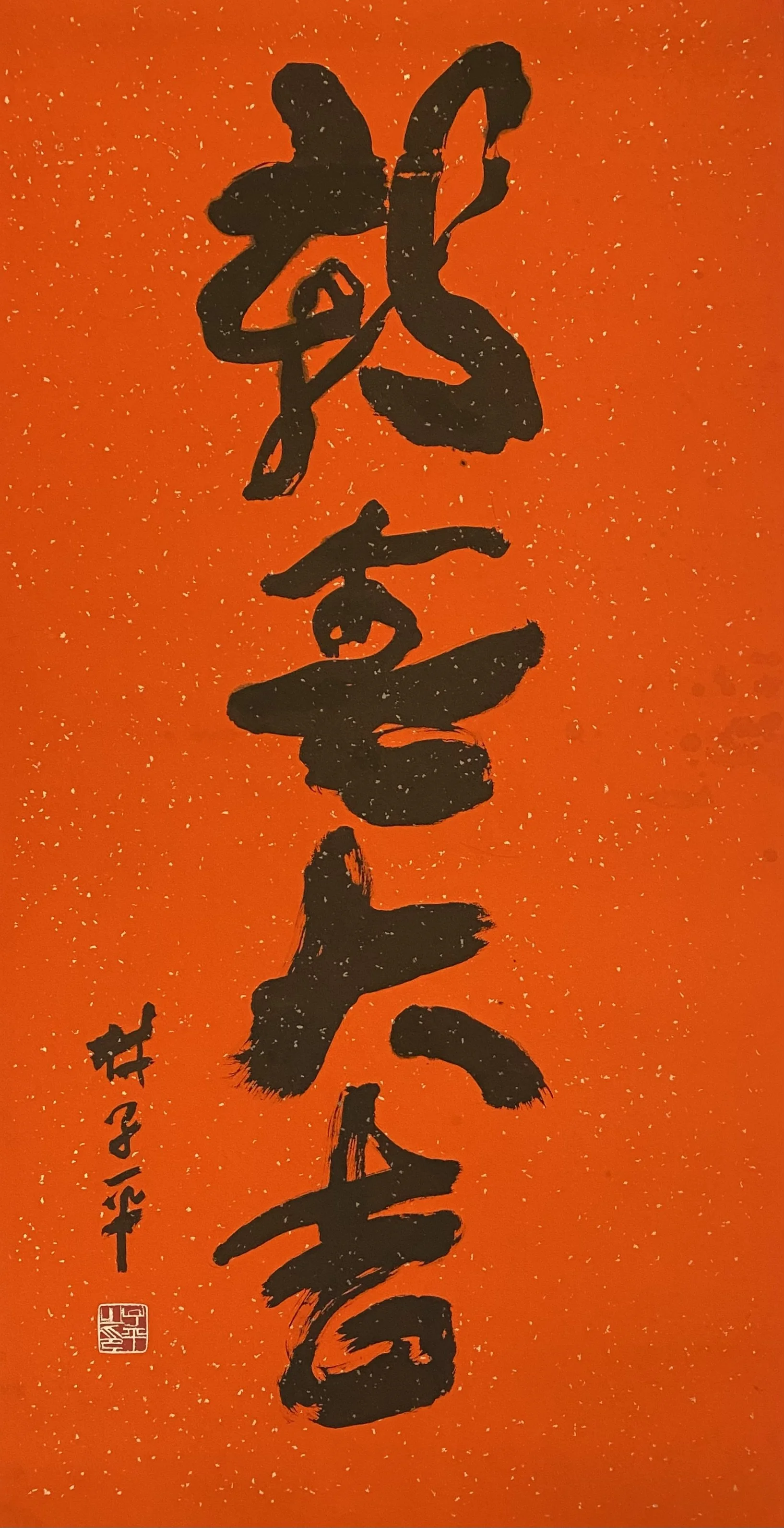
新春大吉
Good Fortune In The New Year
137x70cm
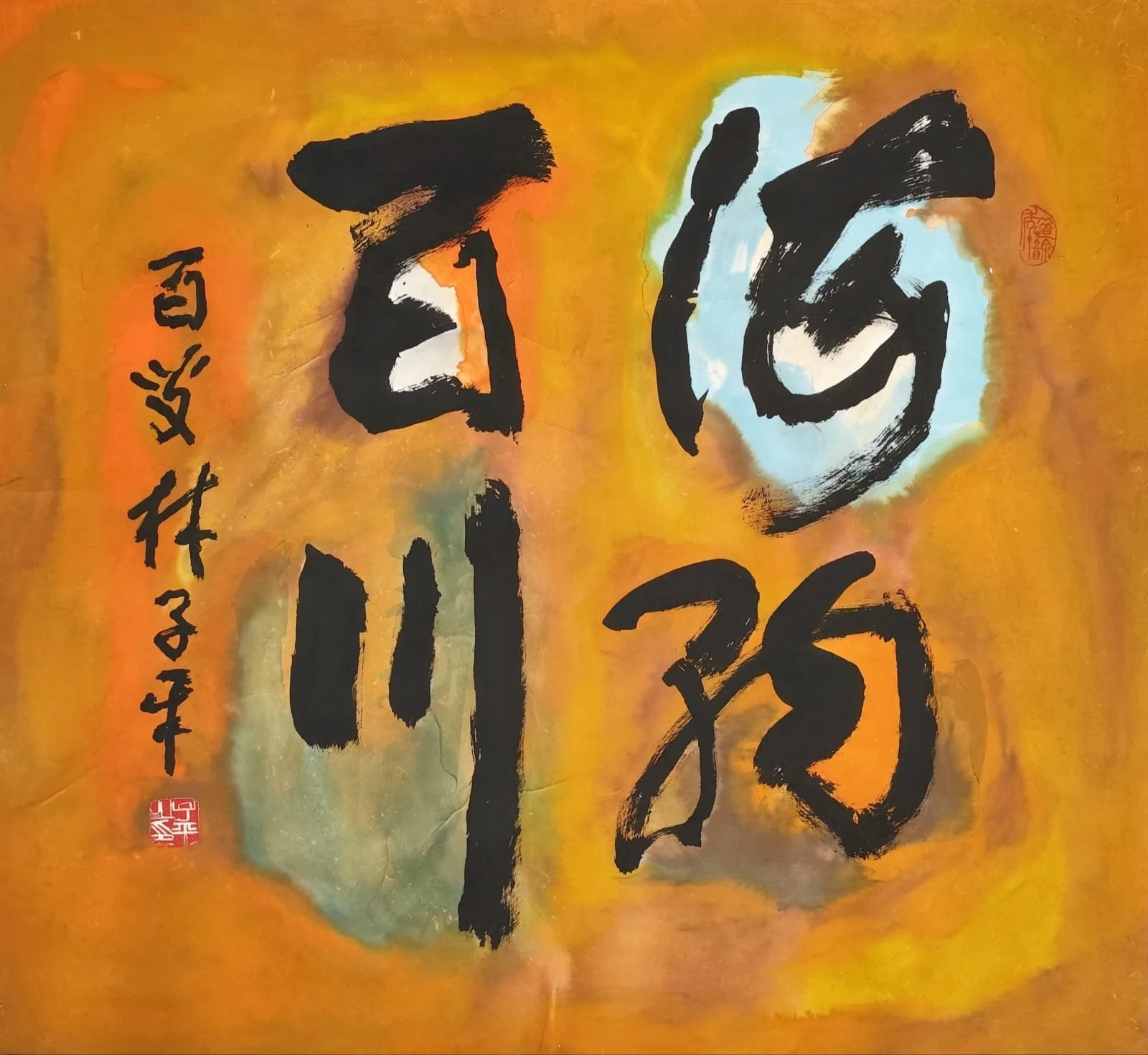
海纳百川
Embracing All, Like the Sea
89x96cm
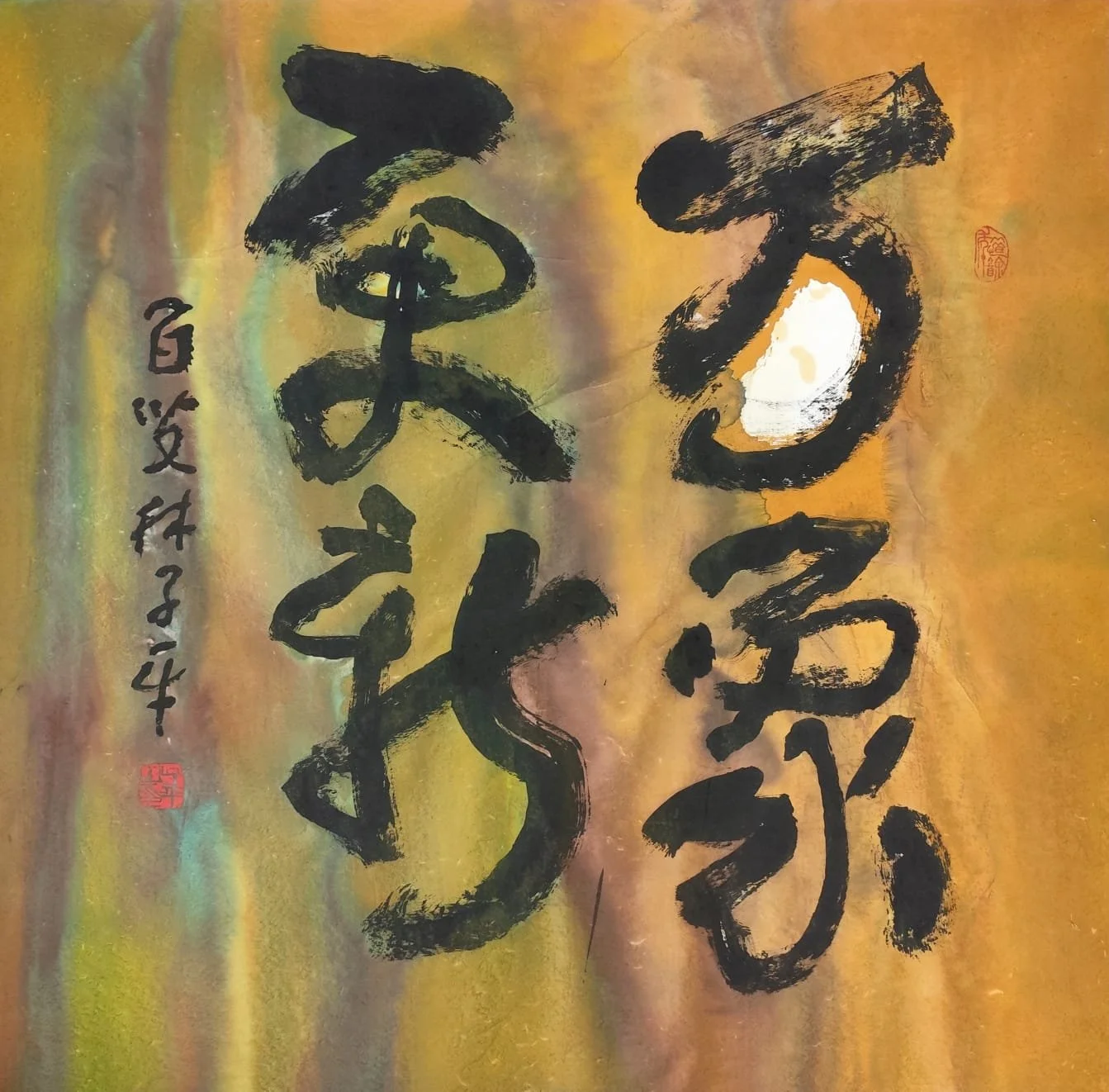
万象更新
A New Beginning
98x99cm
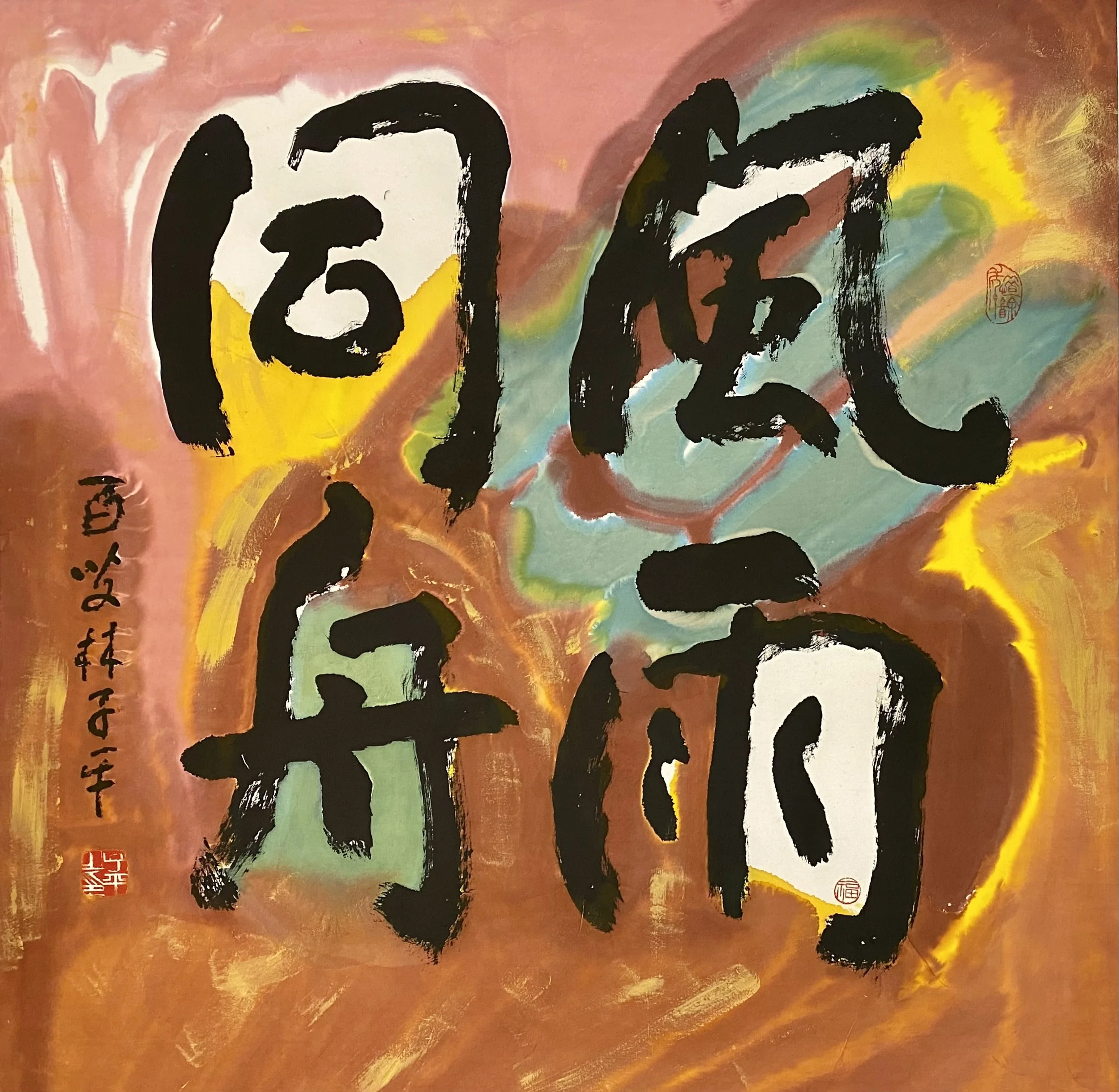
风雨同舟
Through Thick and Thin
92x94cm
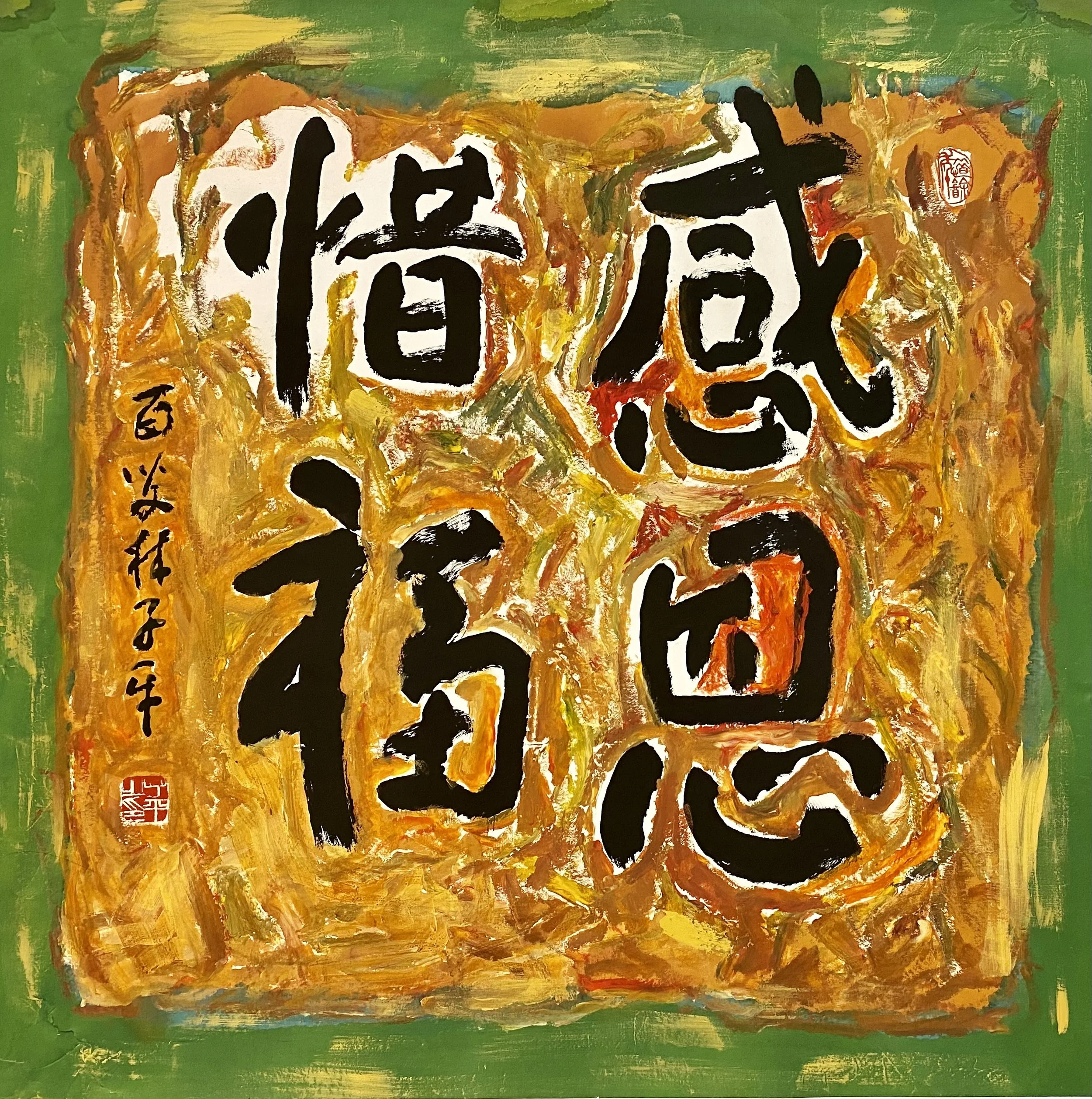
感恩惜福
Grateful for Life’s Blessings
96x96cm
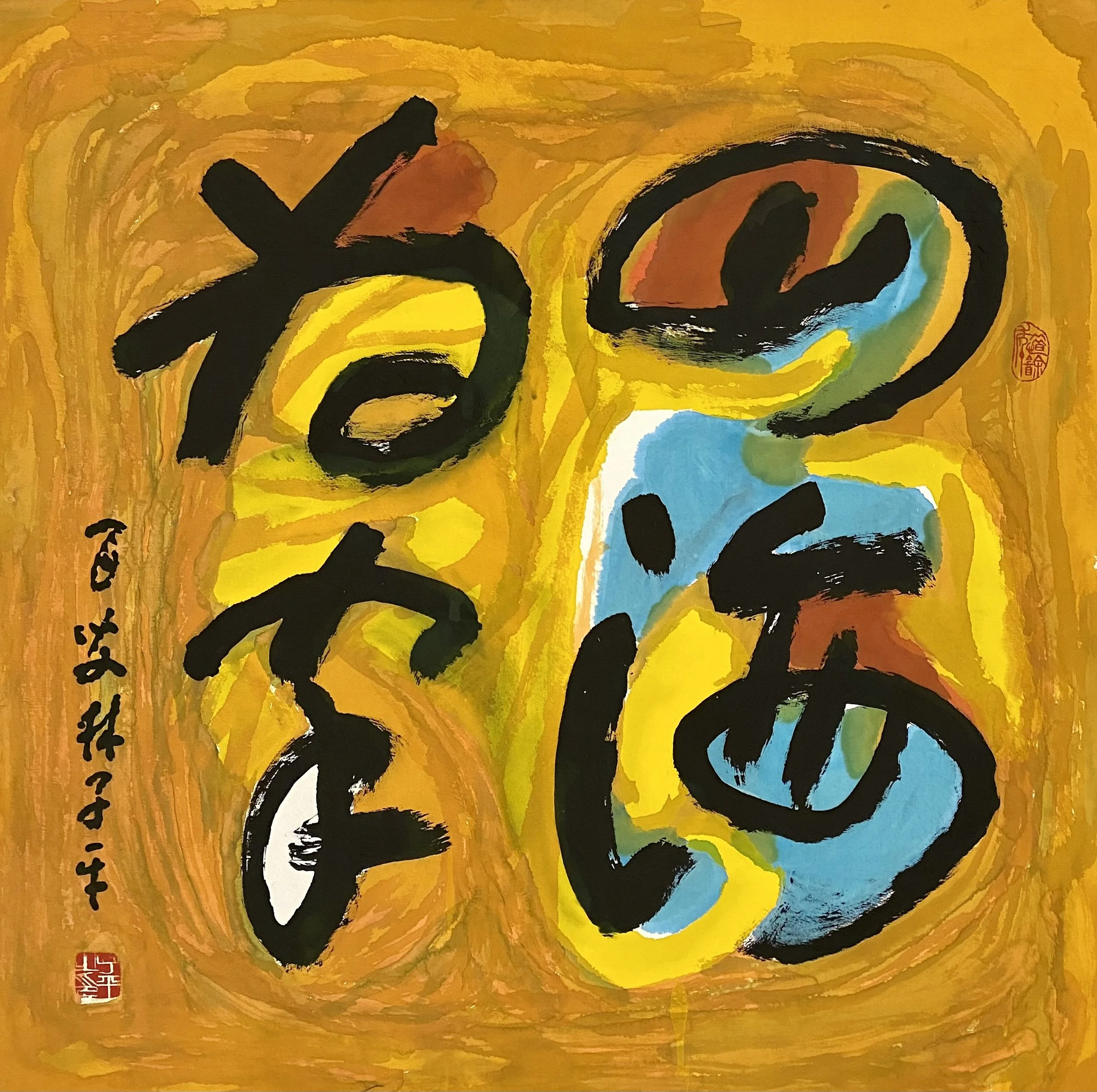
四海为家
The World Is My Home
95x96cm
林子平进一步突破传统书法的界限,将鲜艳的色彩融入文字周围的空间。
蓝、红、黄等不同色彩与强劲的墨线相互交织,使作品远离传统单色书法的形式,呈现出鲜明而独特的现代感。
他对不同艺术传统始终保持开放的态度,而旅行与观看艺术也不断扩展他的视觉语言。
2000年赴巴黎进行两个月的艺术驻留期间,他大量在户外写生与创作,对西方艺术与现代视觉语言有了更直接的体验。
林子平并非简单模仿西方艺术,而是将自己所感受到的色彩、构图、氛围与自由精神融入自身的艺术语言之中,使传统书法能够与更年轻、更当代的观众产生联系。
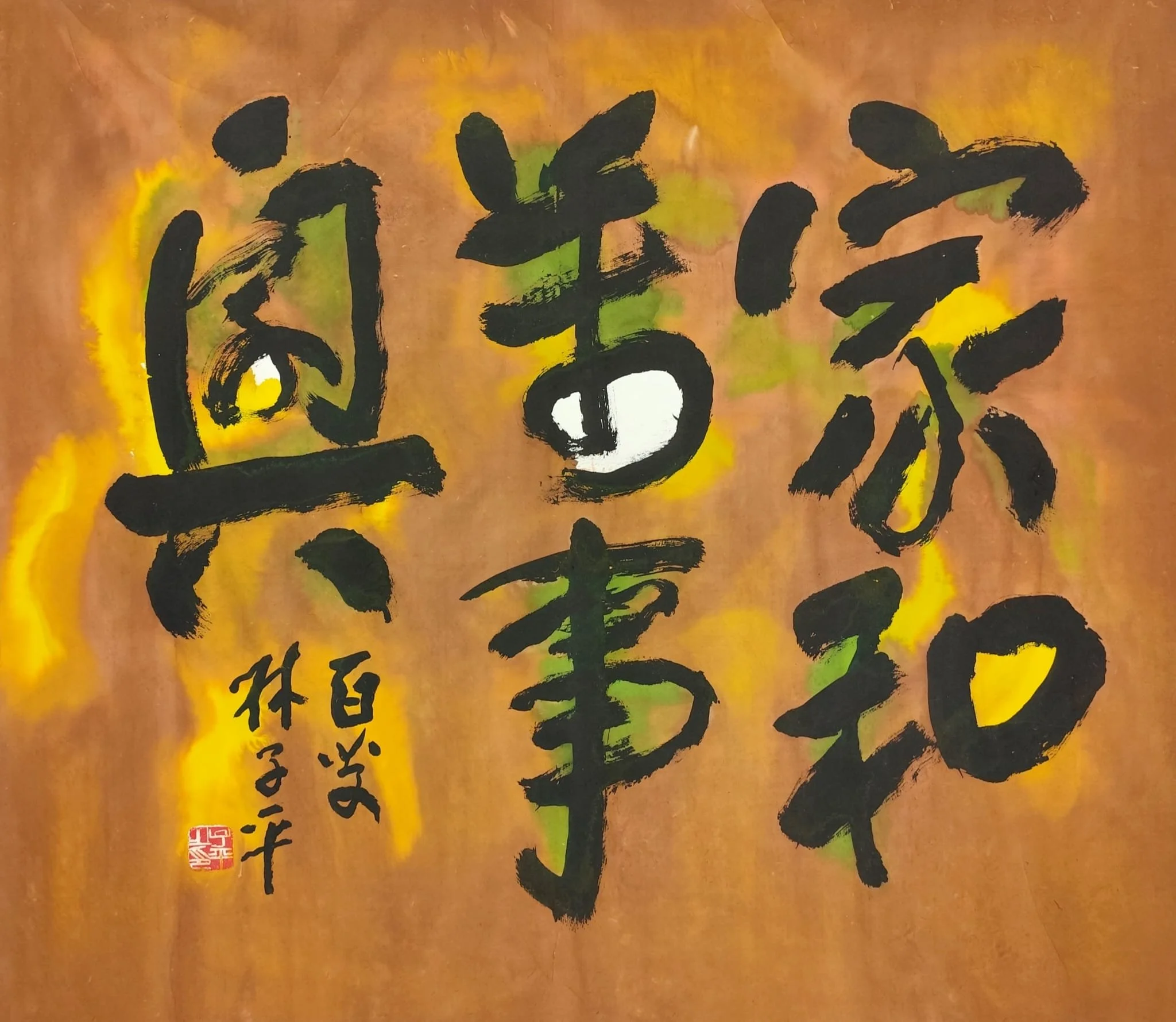
家和万事兴
A Harmonious Family, A Flourishing Life
94x108cm

江山如此多娇
The Magnificent Beauty of the Land
94x100cm
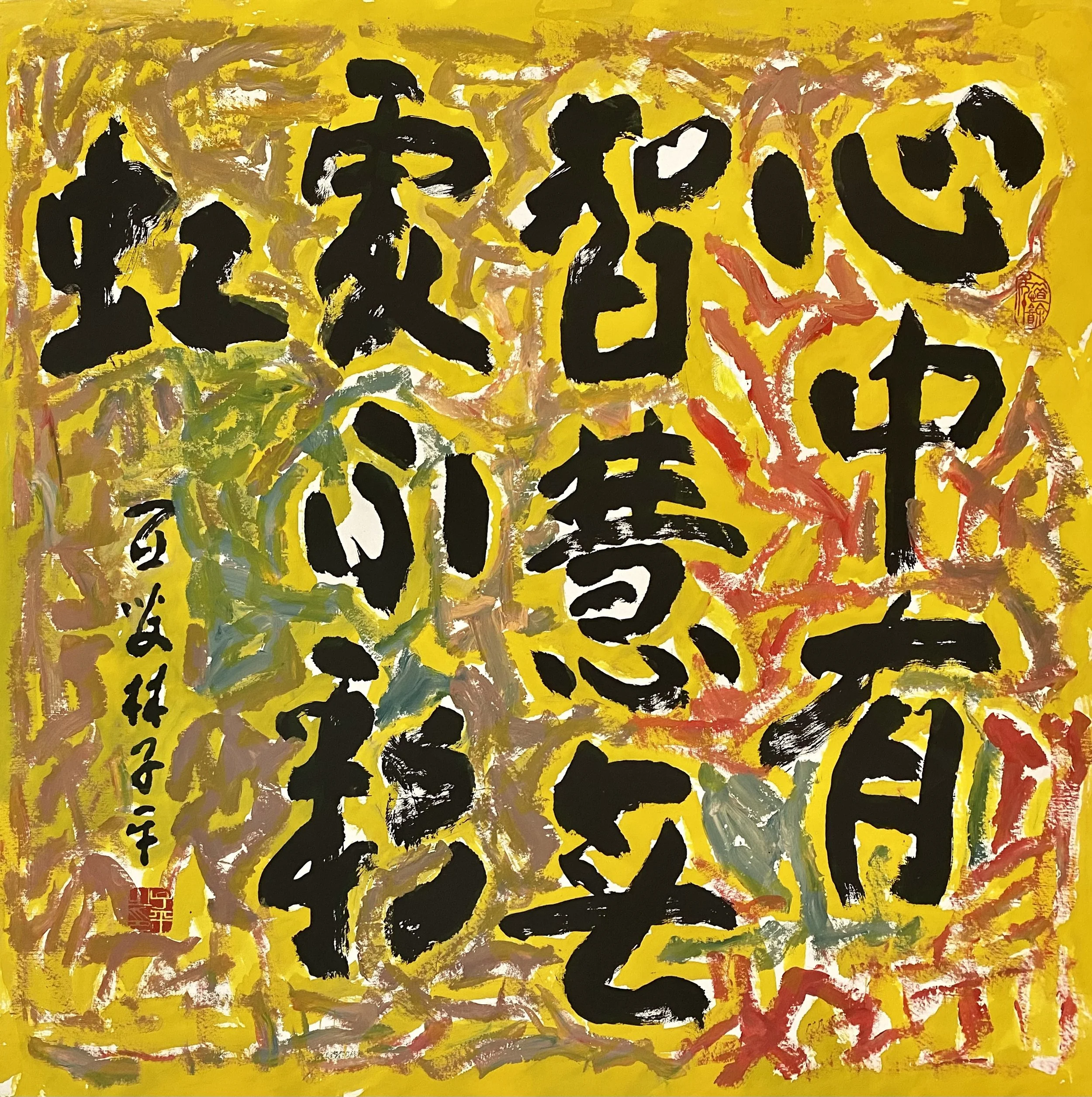
心中有智慧,无处不彩虹
Wisdom in the Heart, Rainbows Everywhere
97x96cm

韦应物
《秋夜寄丘员外》
空山松子落
幽人应未眠
In the mountains, pine nuts fall;
Surely, you too are awake.
幽人 refers to the person the poet is thinking of—someone living a quiet, secluded life.
The poet imagines that his friend is also awake somewhere far away, perhaps also enjoying the autumn night.
The deeper sentiment of this poem is about friendship across distance, connected by the same quiet autumn night.
116x122cm

王之涣
《登鹳雀楼》
欲穷千里目,
更上一层楼
To See Farther, Climb Higher
《登鹳雀楼》 was written in the Tang dynasty and takes its inspiration from a famous three-storey tower in present-day Shanxi.
Over the centuries, the two line has come to represent a much broader idea: to achieve greater understanding, progress or success, one must continue striving and rise to a higher level
85x96cm

王昌龄
《出塞》
秦时明月汉时关,
万里长征人未还。
但使龙城飞将在,
不教胡马度阴山。
Frontier warfare had been going on for generations,
and soldiers could spend years away from their families.
If only the great Han generals who successfully defended the frontier were here
The country would be well protected
Wang Changling expresses admiration for the courage and ability of the great generals of the past, but underneath the heroic language is a desire for the wars to end and there would be peace and harmony in the lands.
beyond the written word 无界
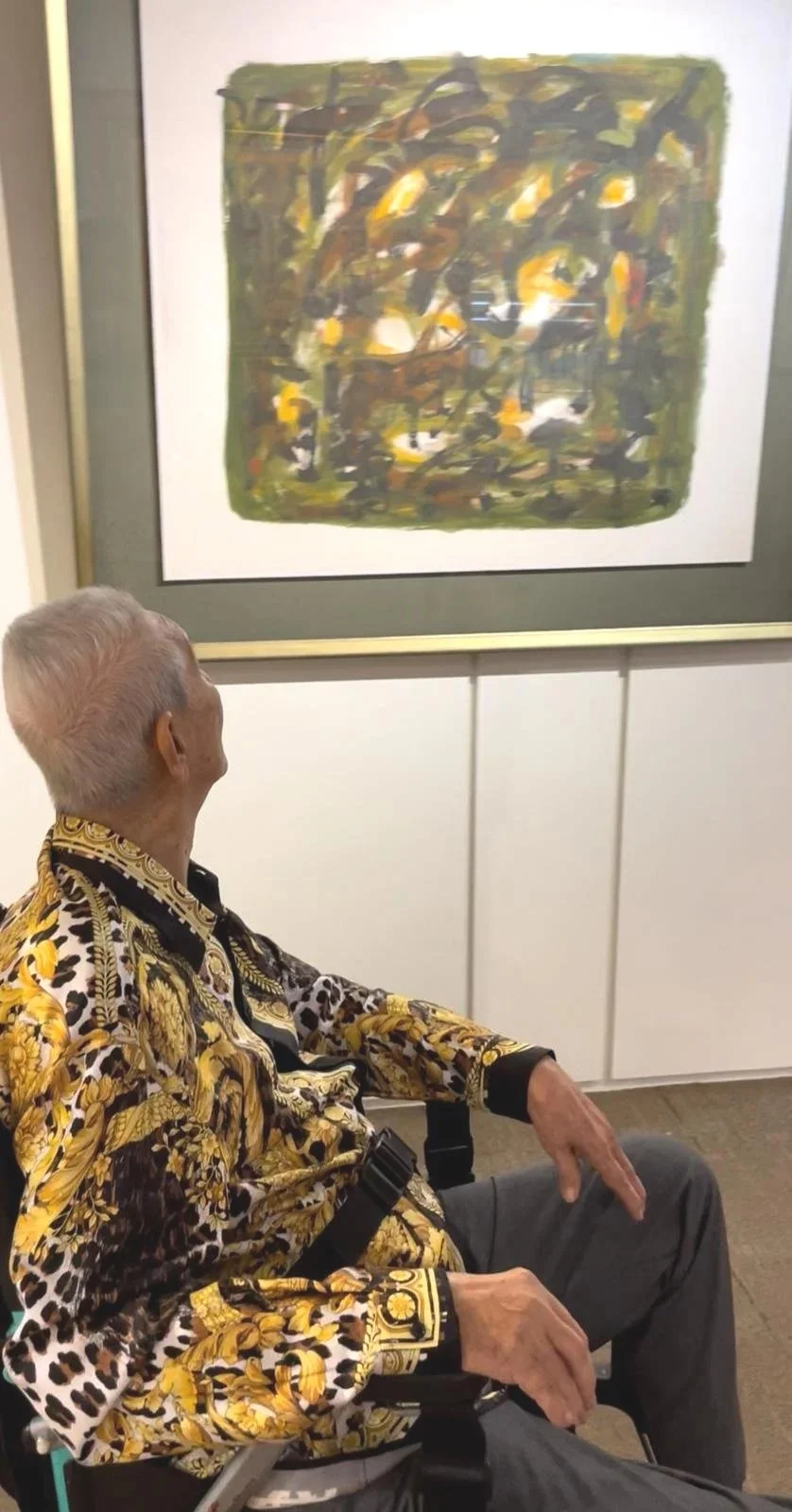
In Lim Tze Peng’s abstract works, calligraphy gradually moves beyond the function of written language and becomes the fundamental structure of the painting.
Rather than relying primarily on blocks of colour, as is often seen in Western abstract painting, Lim builds his compositions around the energy and presence of calligraphic lines. Thick and thin strokes, breaks, overlaps and empty spaces create rhythm, tension and movement across the surface.
The viewer may no longer be able to read every character, yet the spirit of writing remains embedded within the work. This gives his abstraction a distinctive Asian character—one grounded in the discipline, rhythm and philosophy of Chinese calligraphy while embracing the freedom of modern abstraction.

Abstract Calligraphy Series - The Poetry of Movement
抽象系列:动之韵
94x107cm

Abstract Calligraphy Series -The Poetry of Abstraction
抽象系列:抽象之诗
94x107cm

Abstract Calligraphy Series - Radiant Spirit
抽象系列:灼灼其华
105x100cm

Abstract Calligraphy Series:Ink in Motion
抽象系列:墨趣
97x109cm
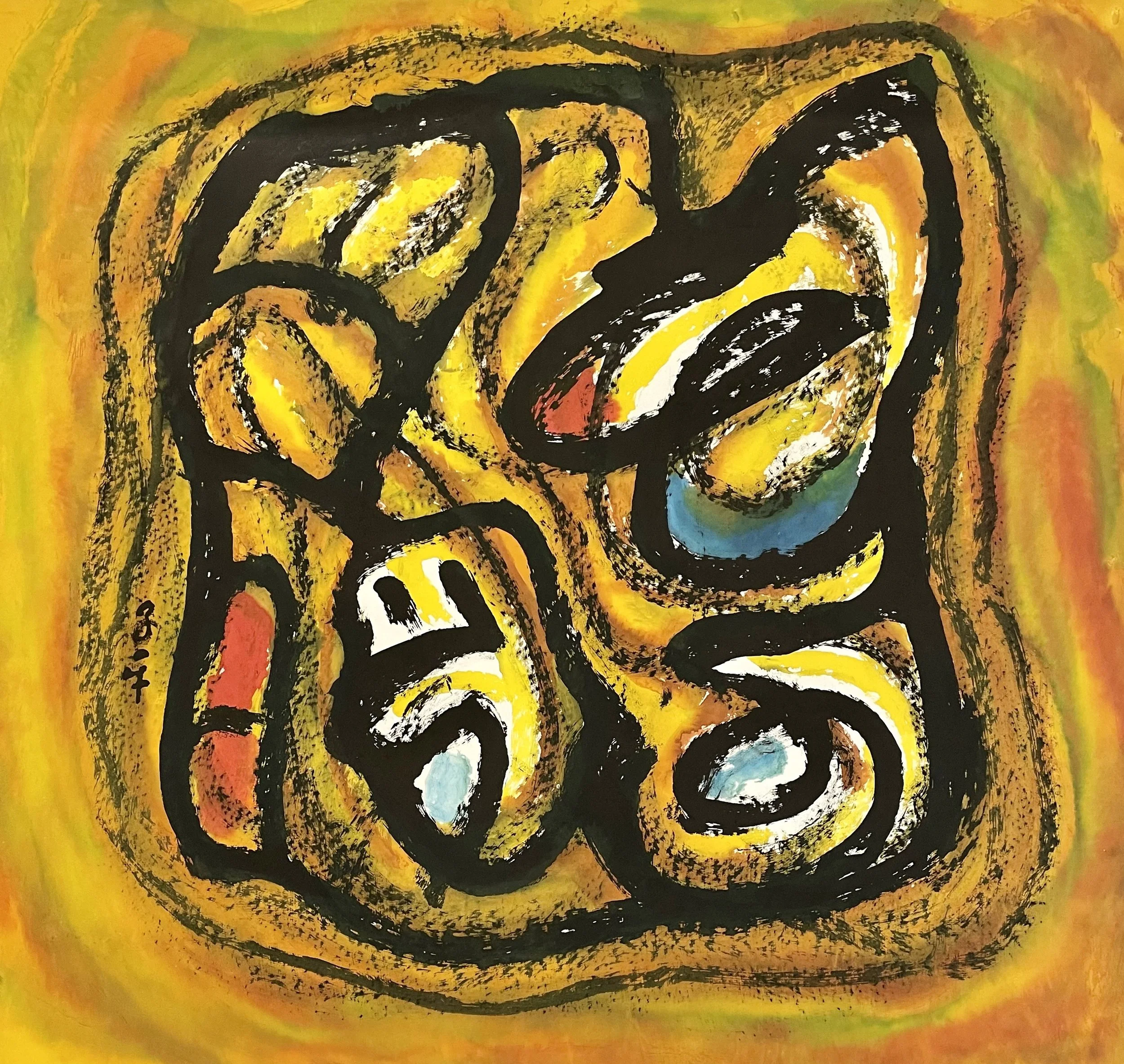
Abstract Calligraphy Series:Vitality
抽象系列:生机
94x99cm